
Ever wondered why Australian mycologists guard their native Panaeolus Cyanescens strains so closely? After years of working with Pan Cyans from around the globe, I can tell you that Grasstree isn’t just another exotic name, it’s genuinely one of the most prolific strains I’ve encountered. This Australian powerhouse consistently produces full flushes of pristine white-stemmed, white-capped mushrooms that would make any researcher’s heart skip a beat. Trust me, once you see what Grasstree can do under the microscope, you’ll understand why it’s become one of our absolute favorite Pan Cyan strains here at Atlas Spores.
Ready to Experience Premium Australian Pan Cyan Genetics?
Grasstree combines the exotic origins of Australian mycology with exceptional reliability, making it the perfect strain for researchers wanting to explore Panaeolus Cyanescens without the typical cultivation challenges. Experience why this prolific strain has become one of our most requested Pan Cyan varieties.
What We’ll Cover
- What Makes Grasstree Special
- Understanding Panaeolus Cyanescens (Pan Cyans)
- Grasstree Strain Characteristics
- Pan Cyans vs. Cubensis vs. Psilocybe Cyanescens
- Cultivation Considerations for Grasstree
- Substrate Specifics: CVG vs. Manure-Based
- Microscopy Features
- Why Choose Grasstree for Your Research
- Frequently Asked Questions
What Makes Grasstree Special
Let me share something fascinating about Australian Pan Cyan genetics, they’ve evolved in some of the harshest conditions on Earth, which makes them incredibly resilient. When I first examined Grasstree spores under the microscope, I immediately noticed the robust spore structure that hints at this strain’s remarkable vigor. This isn’t just marketing speak; Grasstree genuinely produces some of the most consistent full flushes I’ve seen in any Pan Cyan variety.
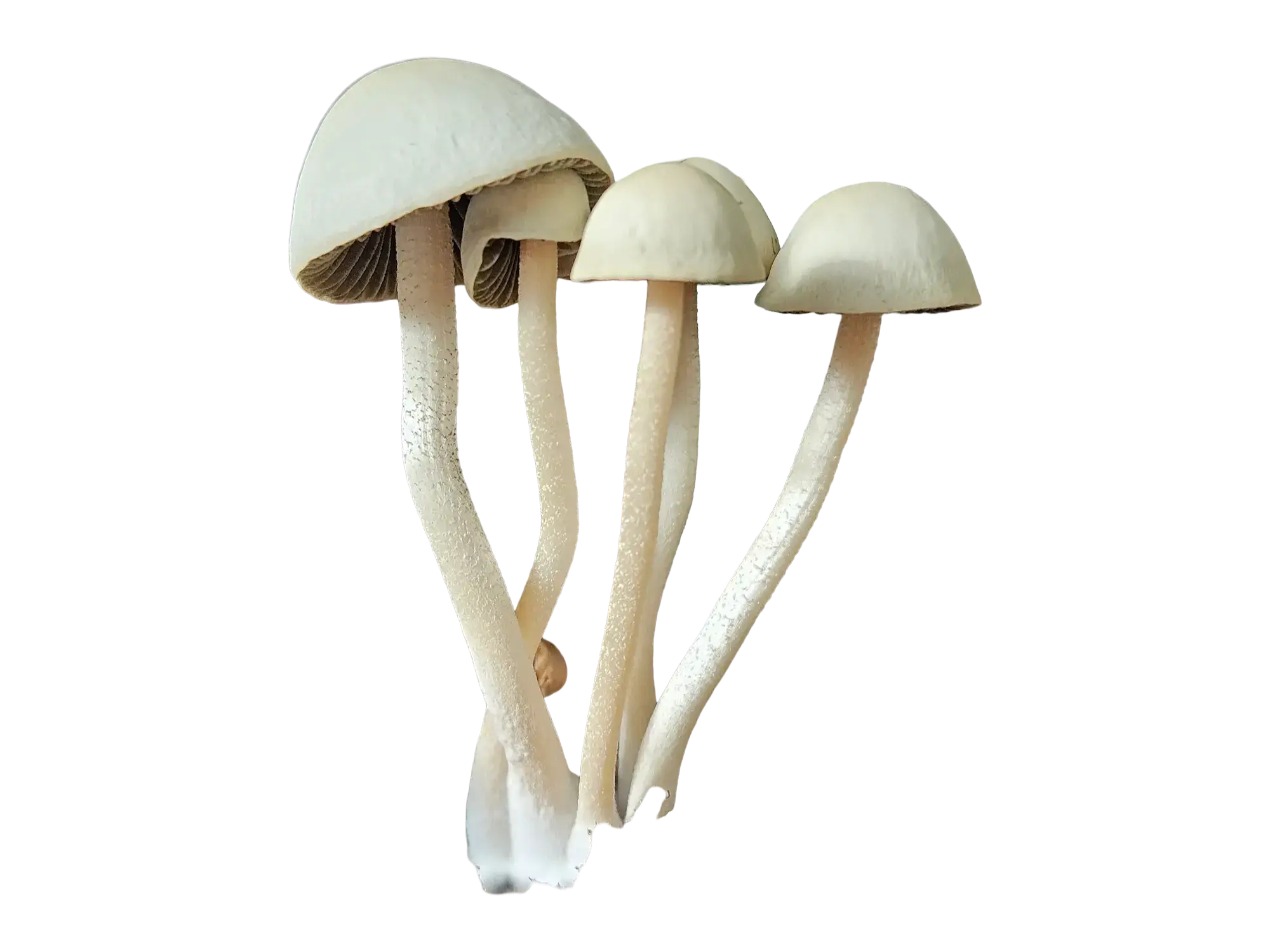
What really sets Grasstree apart from other Pan Cyan strains is its prolific nature. While many Panaeolus Cyanescens varieties can be temperamental, producing sparse or unpredictable flushes, Grasstree consistently delivers those gorgeous white-stemmed, white-capped mushrooms that Pan Cyan enthusiasts dream about. The original collection from Australia has been carefully preserved to maintain these exceptional genetics.
Grasstree Key Features
Origin: First collected in Australia’s unique ecosystems
Appearance: Pristine white stems and caps in full flushes
Growth Pattern: Prolific fruiting with consistent results
Research Value: Premium genetics for microscopy studies
Species: Panaeolus Cyanescens (dung-loving variety)
Understanding Panaeolus Cyanescens (Pan Cyans)
Before we dive deeper into Grasstree specifically, let’s talk about what makes Panaeolus Cyanescens such a fascinating species for research. Pan Cyans, also known as Blue Meanies or Copelandia cyanescens, are coprophilous mushrooms, meaning they absolutely thrive on animal dung. This ecological niche has shaped their evolution in remarkable ways, making them distinctly different from the more commonly studied Psilocybe cubensis.
What many researchers don’t realize is that Pan Cyans are often described as two to three times more potent than wild Psilocybe cubensis specimens. This increased potency, combined with their unique growing requirements, makes them an exciting frontier for serious mycology enthusiasts. Until recently, information about domesticating these species was hidden deep in online forums, but strains like Grasstree are changing that by offering more reliable genetics for research purposes.
Grasstree Strain Characteristics
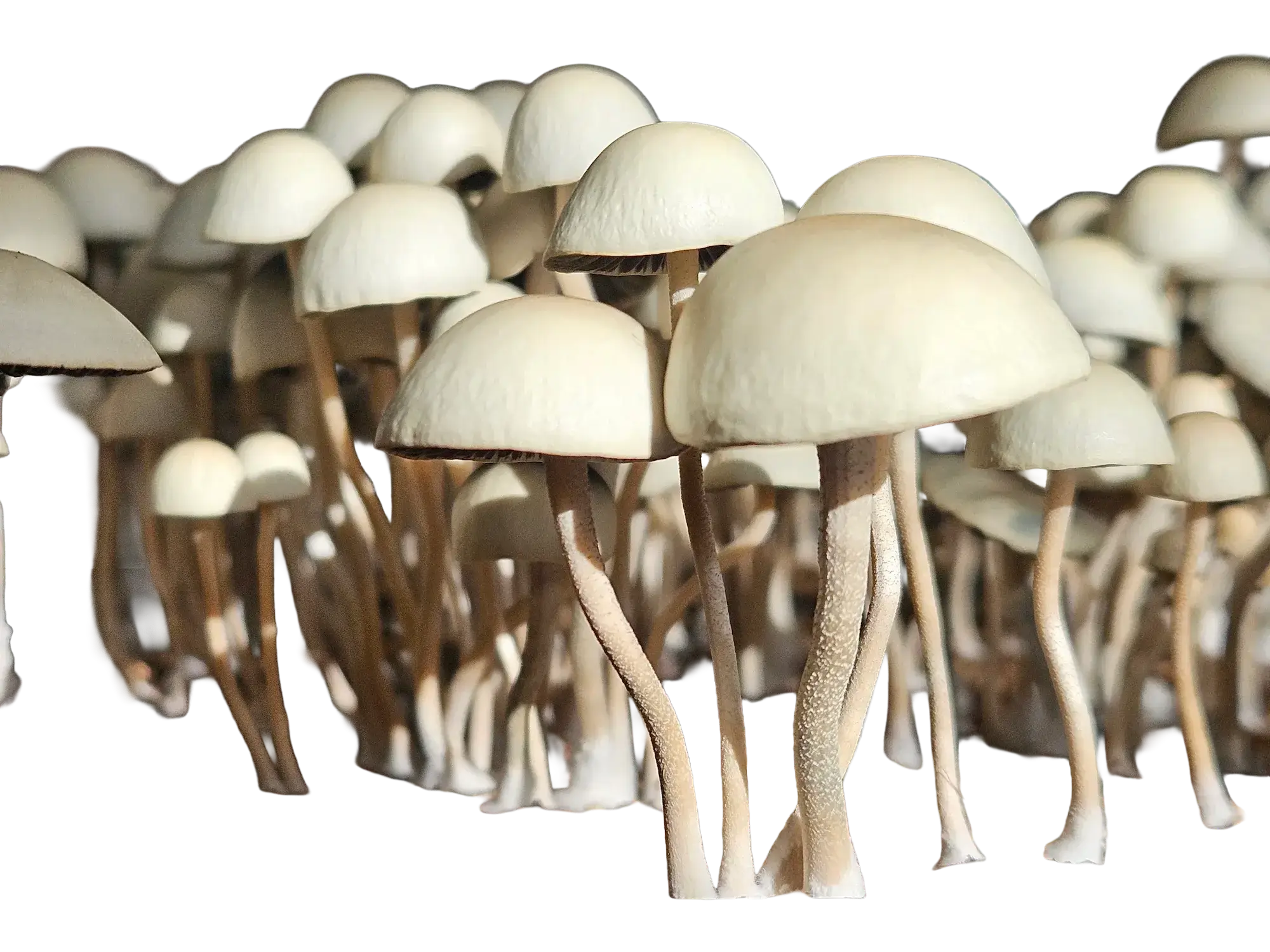
After extensive microscopy work with Grasstree, I’ve documented several characteristics that make this strain exceptional for research. The mycelium growth pattern is distinctly different from what you’d see with cubensis strains, it’s wispy, almost ethereal, and can sometimes be mistaken for gray cottony molds by inexperienced observers. But don’t let that delicate appearance fool you; this mycelium is incredibly aggressive.
Under optimal conditions, Grasstree spores germinate rapidly, sometimes showing inches of growth on agar dishes in as little as days.
Grasstree Growth Characteristics
Colonization Speed: Very rapid
Mycelium Appearance: Wispy, ethereal, grayish-white
Fruiting Bodies: Consistent white stems and caps
Flush Pattern: Full, prolific flushes
Spore Color: Dark purple-black when mature
Pan Cyans vs. Cubensis vs. Psilocybe Cyanescens: Understanding the Differences
Here’s where things get interesting—and potentially confusing for newcomers. We’re dealing with three completely different species that often get mixed up due to similar names. Let me break this down clearly because understanding these differences is crucial for proper research.
| Characteristic | Panaeolus Cyanescens (Grasstree) | Psilocybe Cubensis | Psilocybe Cyanescens |
|---|---|---|---|
| Common Name | Pan Cyans | Cubes, Gold Caps | Wavy Caps |
| Substrate Preference | Dung-loving (requires manure) | Dung-loving (thrives on CVG) | Wood-loving (lignophilous) |
| CVG Compatibility | Poor alone, needs manure base | Excellent, primary substrate | Not compatible |
| Geographic Range | Tropical/subtropical globally | Tropical/subtropical globally | Pacific Northwest primarily |
| Potency | 2-3x wild cubensis | Standard baseline | Extremely potent |
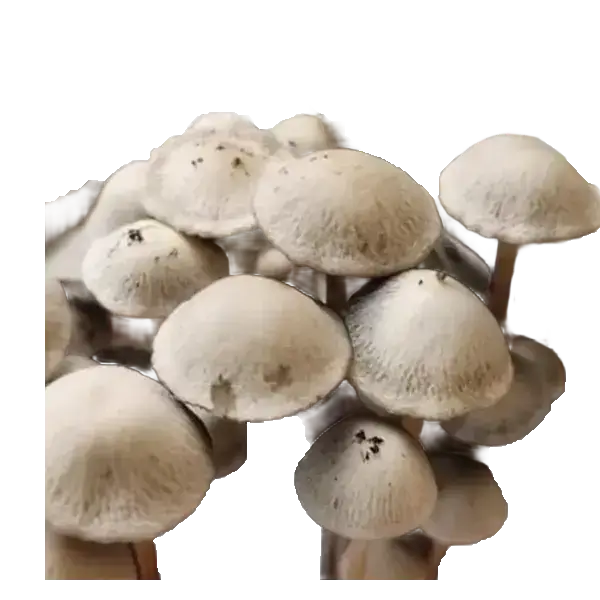
| Cap Appearance | Small, bell-shaped, white | Large, convex to flat, golden | Wavy margins, caramel color |
| Stem Features | Bare, no ring | Ring present from veil | Fibrous, no ring |
| Cultivation Difficulty | Moderate to Advanced | Beginner-friendly | Very difficult |
| Casing Layer | Essential for fruiting | Optional but beneficial | Required |
The key takeaway? While Grasstree (Panaeolus Cyanescens) and Psilocybe cubensis can literally be found growing inches apart on the same piece of cow dung in nature, they have vastly different preferences in cultivation. Cubensis happily thrives on simple CVG (coir, vermiculite, gypsum) substrates, but Pan Cyans like Grasstree need that authentic manure-based nutrition to truly flourish. And you’ll never find Psilocybe cyanescens (the wood-lover) in that environment at all, it’s a completely different beast that requires decaying wood substrates and thrives in cooler climates like the Pacific Northwest.
Cultivation Considerations for Grasstree
Now, I need to be straight with you, Pan Cyans like Grasstree have a reputation for being more challenging than cubensis, and there’s some truth to that. But here’s what most guides won’t tell you: with the right approach and understanding of their unique requirements, Grasstree can be just as rewarding to work with as any cubensis strain.
The critical difference lies in substrate preparation. While both Pan Cyans and cubensis are dung-loving mushrooms, their substrate flexibility couldn’t be more different. Cubensis will happily fruit on simple CVG substrates, but Grasstree absolutely requires a proper manure-based substrate to thrive. You can’t just throw these spores on the same grain spawn or coir mix you’d use for cubensis and expect good results.
Grasstree Substrate Requirements
Primary Component: Aged manure (horse or cow preferred)
Supplementation: Straw, vermiculite for structure
CVG Role: Bulk extender only, not primary nutrition
Moisture Content: Higher than cubensis (70-75%)
pH Range: Slightly alkaline (7.5-8.0)
Casing Layer: Essential – peat/vermiculite with lime
Preparation: Pasteurization essential for contamination prevention
Temperature control is another crucial factor with Grasstree. While cubensis can tolerate a fairly wide temperature range, Pan Cyans prefer it warmer, ideally between 75-85°F during colonization. They’re also more sensitive to CO2 levels, requiring better air exchange than you might be used to with cubensis cultivation.
Substrate Specifics: Why CVG Alone Doesn’t Work for Grasstree
Let me address a common question I get: “Can’t I just use CVG like I do with my cubensis?” The short answer is technically yes, but you’ll be disappointed with the results. While some growers report getting sparse fruits from Grasstree on straight CVG, the yields and reliability are nowhere near what you’d achieve with a proper manure-based substrate.
Here’s the science behind it: CVG is mostly structural and relatively low in the partially decomposed organic matter that Pan Cyans crave. In nature, these mushrooms have evolved specifically to break down animal dung, extracting nutrients from the complex organic compounds found there. CVG simply doesn’t provide the same nutritional profile.
Recommended Substrate Approach for Grasstree
Base Layer: Spawn colonized grain (milo, millet, or wheat) into manure/straw mix
CVG Usage: Add as bulk extender (30% max) for improved texture and moisture retention
Alternative Additions: Composted manure, sugarcane mulch, or leaf mold
Casing Layer: Non-nutritive peat/vermiculite with lime (pH 8.0)
Key Point: CVG supports structure, manure provides nutrition
The casing layer deserves special attention here. While cubensis can fruit without a casing (though it helps), Pan Cyans like Grasstree absolutely need one. This non-nutritive layer, typically made from peat and vermiculite adjusted to a slightly alkaline pH with lime, provides the perfect microclimate for pinning. Without it, even the best substrate will struggle to produce those full flushes Grasstree is known for.
Microscopy Features of Grasstree
Under the microscope, Grasstree spores reveal why this strain is so special for research. The spores are distinctly lemon-shaped (ellipsoid), measuring approximately 12-15 x 7-9 micrometers, noticeably different from the more rounded cubensis spores. They display a smooth surface with a prominent germ pore, and when fresh, exhibit that characteristic dark purple-black coloration that Pan Cyan researchers love to observe.
What’s particularly interesting about Grasstree spores is their germination pattern. Unlike some Pan Cyan strains that can be slow or erratic to germinate, Grasstree shows consistent, vigorous germination across multiple test samples. This reliability makes it an excellent choice for researchers who need predictable results for their studies.
The basidia structure in Grasstree is also noteworthy—typically 4-spored with occasional 2-spored variants, producing those characteristic jet-black spore prints that are so distinctive of healthy Pan Cyans. When examining gill tissue, you’ll notice the pleurocystidia and cheilocystidia are more pronounced than in cubensis, giving Grasstree its unique microscopic signature.
Why Choose Grasstree for Your Research
After working with dozens of Pan Cyan varieties over the years, I keep coming back to Grasstree for several reasons. First, the consistency is unmatched, when you’re conducting research, the last thing you want is unpredictable genetics throwing off your observations. Grasstree delivers reliable results batch after batch, something that can’t be said for many Pan Cyan strains.
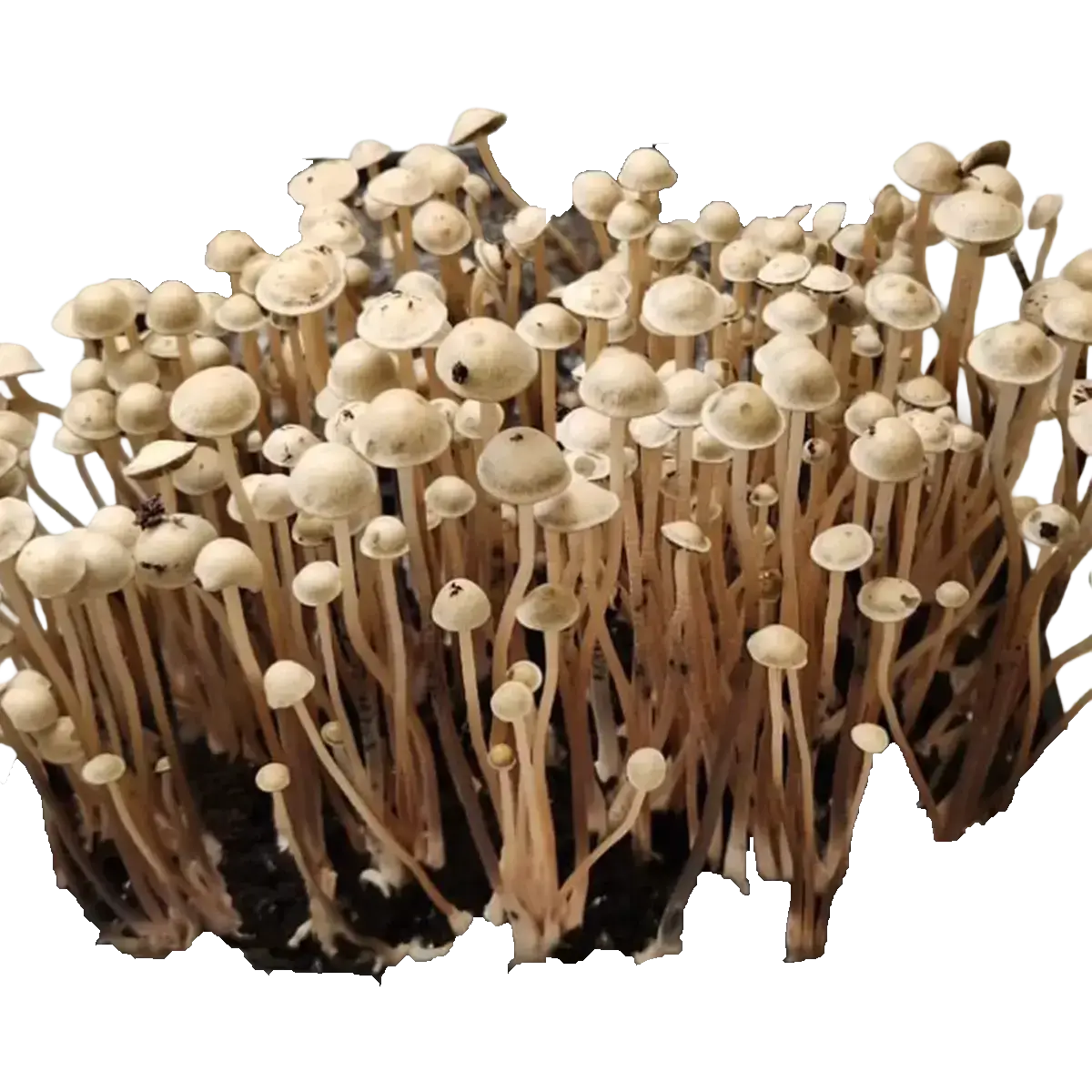
Second, those full flushes of white-stemmed, white-capped mushrooms aren’t just aesthetically pleasing (though they certainly are beautiful under the microscope). The prolific fruiting means you get more material to study from a single culture, making your research more efficient and cost-effective. When properly cultivated on manure-based substrates with appropriate casing, Grasstree can produce yields that rival even productive cubensis strains.
Research Applications
Grasstree excels in various research contexts:
• Comparative Studies: Ideal for Pan Cyan vs. Cubensis research
• Substrate Studies: Perfect for testing manure vs. alternative substrates
• Genetic Analysis: Stable genetics for consistent results
• Microscopy Training: Clear, distinctive features for education
• Spore Morphology: Excellent specimens for detailed observation
• Growth Pattern Studies: Reliable colonization and fruiting cycles
Finally, there’s something special about working with Australian genetics. The unique evolutionary pressures of the Australian continent have produced a strain that’s both robust and refined. Grasstree represents years of natural selection in one of the world’s most challenging environments, resulting in genetics that are truly exceptional for research purposes.
Ready to explore the fascinating world of Pan Cyans? Start your journey with our premium Australian genetics.
Frequently Asked Questions About Grasstree Pan Cyans
Can I grow Grasstree on CVG substrate like I do with cubensis?
While it’s technically possible to get some fruits on straight CVG, you’ll be disappointed with the results. Grasstree Pan Cyans need manure-based substrates for optimal yields. CVG works great as a bulk extender or for improving texture, but it shouldn’t be your primary substrate. Think of CVG as a supporting player rather than the main food source, use it alongside aged manure, straw, or other organic materials for best results.
Is Grasstree suitable for beginners to Pan Cyan research?
While Pan Cyans are generally considered more advanced than cubensis, Grasstree is actually one of the more forgiving Pan Cyan strains. Its prolific nature and consistent growth patterns make it a good choice for researchers ready to move beyond cubensis. Just remember that you’ll need to adjust your techniques, particularly regarding substrate preparation with proper manure-based materials and implementing a proper casing layer.
What’s the difference between a casing layer for Pan Cyans vs. cubensis?
The main difference is necessity—cubensis can fruit without a casing (though it helps), but Pan Cyans absolutely require one. The Pan Cyan casing also needs a higher pH (around 8.0) achieved with lime, compared to the more neutral pH used for cubensis. The casing for Grasstree should be non-nutritive (peat/vermiculite) and about 0.5-1 inch thick to maintain the surface humidity these mushrooms need for reliable pinning.
How does Grasstree compare to other Pan Cyan strains?
Grasstree stands out for its reliability and prolific fruiting. While strains like Jamaican or Hawaiian Pan Cyans might be more well-known, Grasstree consistently produces fuller flushes with those characteristic white caps. Many researchers find it more predictable than other Pan Cyan varieties, which can be temperamental. The Australian genetics seem to provide an extra level of vigor that translates to better colonization and fruiting.
What makes Australian Pan Cyan genetics special?
Australian strains like Grasstree have evolved in unique conditions with extreme temperature fluctuations and diverse substrates. This has resulted in particularly robust genetics that tend to be more adaptable to various research conditions while maintaining their prolific fruiting characteristics. The isolation of the Australian continent has also allowed these genetics to develop unique traits not found in Pan Cyans from other regions.
Why are Pan Cyans considered more potent than cubensis?
Research suggests Pan Cyans contain 2-3 times the active compounds found in wild cubensis specimens. This could be due to higher concentrations of psilocybin and psilocin, or possibly other alkaloids we haven’t fully quantified yet. This increased potency, combined with their unique substrate requirements and growth patterns, makes them particularly interesting for researchers studying these compounds and their variations across species.
How fast does Grasstree colonize compared to cubensis?
Grasstree is remarkably fast—often showing inches of growth on agar in just 3 days, compared to 7-10 days for many cubensis strains. When grown side by side, Grasstree typically reaches the edge of petri dishes days before even fast cubensis varieties. This rapid colonization continues through grain spawn and bulk substrate, though remember that the fruiting process requires more specific conditions than cubensis.
Final Thoughts on Grasstree Pan Cyans
After years of working with various Panaeolus Cyanescens strains, I can confidently say that Grasstree represents something special in the world of mycology research. It’s not just another Pan Cyan strain, it’s a testament to the incredible diversity and potential within this fascinating species. The combination of Australian genetics, prolific fruiting, and those stunning white flushes makes it a must-have for any serious researcher looking to expand beyond cubensis.
Yes, Grasstree requires more attention than your average cubensis strain. You’ll need proper manure-based substrates, not just CVG. You’ll need to maintain that essential casing layer. And you’ll need to dial in your temperature and air exchange just right. But when you see those full flushes of pristine white mushrooms—something that would make any mycologist’s heart race—you’ll understand why the extra effort is worth it.
Whether you’re interested in comparative studies between Pan Cyans and cubensis, exploring substrate preferences, or simply want to observe one of nature’s most beautiful Pan Cyan varieties under the microscope, Grasstree delivers on all fronts. This strain bridges the gap between the wild vigor of freshly collected genetics and the reliability needed for consistent research.
Ready to Experience the Grasstree Difference?
Don’t miss the opportunity to work with one of the most prolific Pan Cyan strains available. Grasstree’s Australian genetics offer unmatched reliability and those stunning white flushes that make research truly exciting. Join the growing community of researchers who’ve discovered why this strain has become one of our absolute favorites.