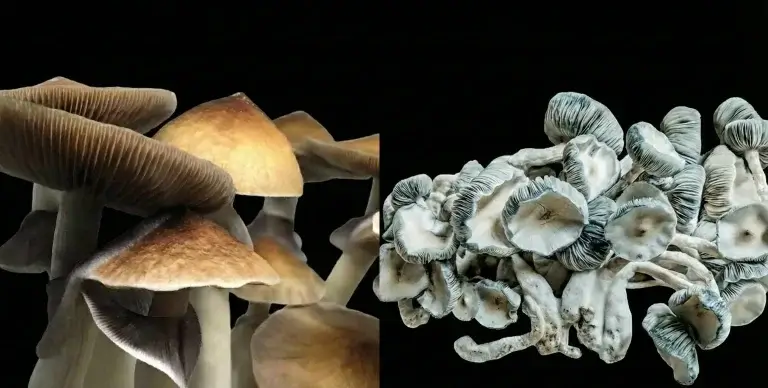
Psychedelic mushrooms have been used for centuries in spiritual and healing traditions, but only in recent decades has modern science begun to study how these fungi act on the brain. At the center of this research is psilocybin, the primary active compound found in mushrooms of the Psilocybe genus.
Researchers at institutions like Johns Hopkins University, Imperial College London, and UCLA are studying how psilocybin affects brain activity, emotional processing, and the connections between brain cells.
What Is Psilocybin?
Psilocybin is a naturally occurring psychedelic compound present in over 200 species of mushrooms, including well-known varieties like Psilocybe cubensis, Psilocybe cyanescens, and Psilocybe semilanceata.
In the body, psilocybin is metabolized into psilocin, which binds to serotonin receptors in the brain—specifically, the 5-HT2A receptors. This receptor interaction is the focus of much of the research described below.
For Researchers: Curious about Psilocybe species? Our microscopy-ready liquid culture collection allows you to study the genetic diversity of over a dozen strains—ideal for taxonomy, microscopy, and educational research.
The Neuroscience of Psilocybin: What Researchers Are Studying
Recent neuroscience research is examining how psilocybin affects brain activity:
1. Breaking Down Neural Barriers
Brain-imaging studies report that under psilocybin, regions that usually operate independently communicate more across networks.
A 2020 study in Nature Communications reported that psilocybin disrupts and reorganizes functional brain networks. More recent research published in Nature in 2024 reported that psilocybin “desynchronizes” brain activity, temporarily disrupting established neural networks, particularly those involved in our perception of self, space, and time.
2. Neuroplasticity Research
Researchers are also studying whether psilocybin affects neuroplasticity—the brain’s ability to reorganize itself and form new synaptic connections.
A 2021 study in mice published in Neuron reported that a single administration of psilocybin increased the density and size of dendritic spines in the frontal cortex. The researchers found increases of roughly ten percent in spine size and density, appearing within a day and persisting for over a month.
3. Emotional Processing Research
Researchers are also studying psilocybin’s effect on the amygdala—the brain’s emotional processing center.
Research published in Scientific Reports reported that psilocybin treatment decreased cerebral blood flow in the amygdala in study participants with treatment-resistant depression, and that this reduction correlated with decreased depressive symptoms. A paper published in Nature Medicine further examined changes in brain networks after psilocybin therapy for depression.
Clinical Research Areas
Clinical trials are investigating psilocybin in several areas:
Depression and Anxiety Research
Psilocybin-assisted therapy is being studied for depression and anxiety. Trials led by Johns Hopkins reported that one to two sessions were followed by improvements in mood that lasted for months in many participants. These are research findings from controlled clinical settings.
Addiction Research
Early-stage research is also exploring psilocybin in the context of substance use disorders. Results so far are preliminary.
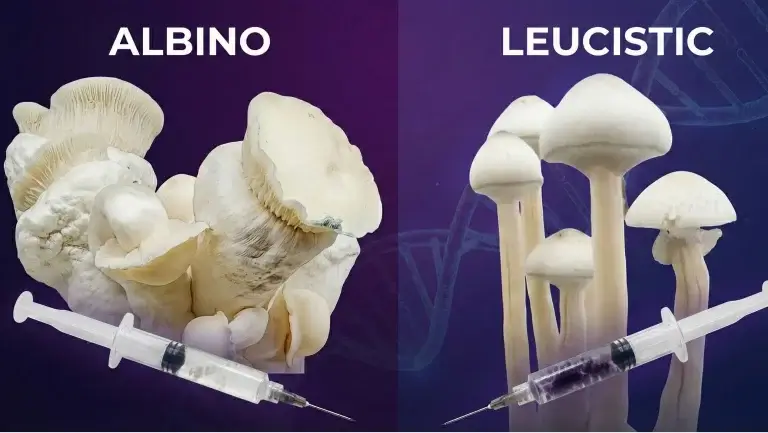
For Mycology Enthusiasts: We offer sterile, lab-tested liquid culture syringes for side-by-side comparison of Psilocybe species under the microscope. Each syringe is carefully prepared in our ISO 6 clean room, and every batch is agar-tested and sterility-tested before it ships.
Our most popular variety, Golden Teacher (Psilocybe cubensis), is one of the best-known cubensis strains. Our Golden Teacher liquid culture syringes are sold for taxonomy studies, educational demonstrations, and comparative research.
Shop Golden Teacher Liquid Culture Syringes →
Research Resources: Our liquid culture syringes are produced in our ISO 6 clean room for documented research, with third-party lab reports published on our lab results page. Each 10cc syringe comes with a sterile needle and alcohol prep pad.
The Future of Fungal Neuroscience
As scientific exploration of psilocybin deepens, it has become an active area of psychiatric and neurological research.
Conditions researchers are investigating include:
- PTSD
- End-of-life anxiety
- Major depressive disorder
Each new study adds to what is known about how psilocybin acts on the brain.
Explore Our Premium Liquid Culture Collection →
Disclaimer: This article is for educational purposes only. Psilocybin remains a controlled substance in many jurisdictions. All liquid cultures are sold strictly for microscopy and taxonomy research purposes only. Always follow local laws and regulations when conducting research.