
Albino Bluey Vuitton isn't just another pretty albino strain. It's a carefully engineered hybrid that tells the story of what happens when you cross Panama's bulletproof colonization genetics with Melmac Penis Envy's legendary density. The result? A strain that looks like it belongs in a gallery but grows like it belongs in a beginner's first cultivation project.
Created by mycologist "Silly Cybin" back in 2014, ABV has spent nearly a decade proving itself as one of the most reliable premium strains in circulation. Its signature squat, compact morphology isn't just visually distinctive. It's a direct expression of the Melmac PE influence that makes this strain so valued for research applications.
Whether you're documenting your first colonization or adding another premium genetic line to an established collection, this guide covers everything from the science behind ABV's unique characteristics to the specific techniques that help this strain thrive.
Add ABV's Premium Hybrid Genetics to Your Research Collection
Albino Bluey Vuitton delivers the visual appeal of true albino genetics combined with the robust growth characteristics that made its parent strains famous. Each syringe contains carefully isolated genetics from verified ABV lineage, ensuring the consistent morphology and reliable colonization this strain is known for.
Get Albino Bluey Vuitton Spore SyringesWhat We'll Cover
- Understanding ABV's Genetic Heritage
- Physical Characteristics and Identification
- How ABV Compares to Similar Strains
- Substrate Preparation and Equipment
- Inoculation Protocol
- Colonization Phase
- Fruiting Conditions
- Harvest Timing and Technique
- Troubleshooting ABV-Specific Issues
- Frequently Asked Questions
Understanding ABV's Genetic Heritage: Panama Meets Melmac PE
To really understand Albino Bluey Vuitton, you need to understand what Silly Cybin was working with when creating the original Bluey Vuitton cross. This wasn't a random pairing. It was a deliberate combination designed to solve a specific problem: how do you get Penis Envy-level density without Penis Envy-level difficulty?
The answer came from Panama cubensis, a strain collected from tropical Central American environments where it evolved to colonize substrates quickly and aggressively. Panama's claim to fame has always been its resilience. It handles temperature fluctuations, recovers from contamination pressure, and colonizes faster than most cubensis varieties. These aren't glamorous traits, but they're exactly what you want as the foundation for a hybrid.
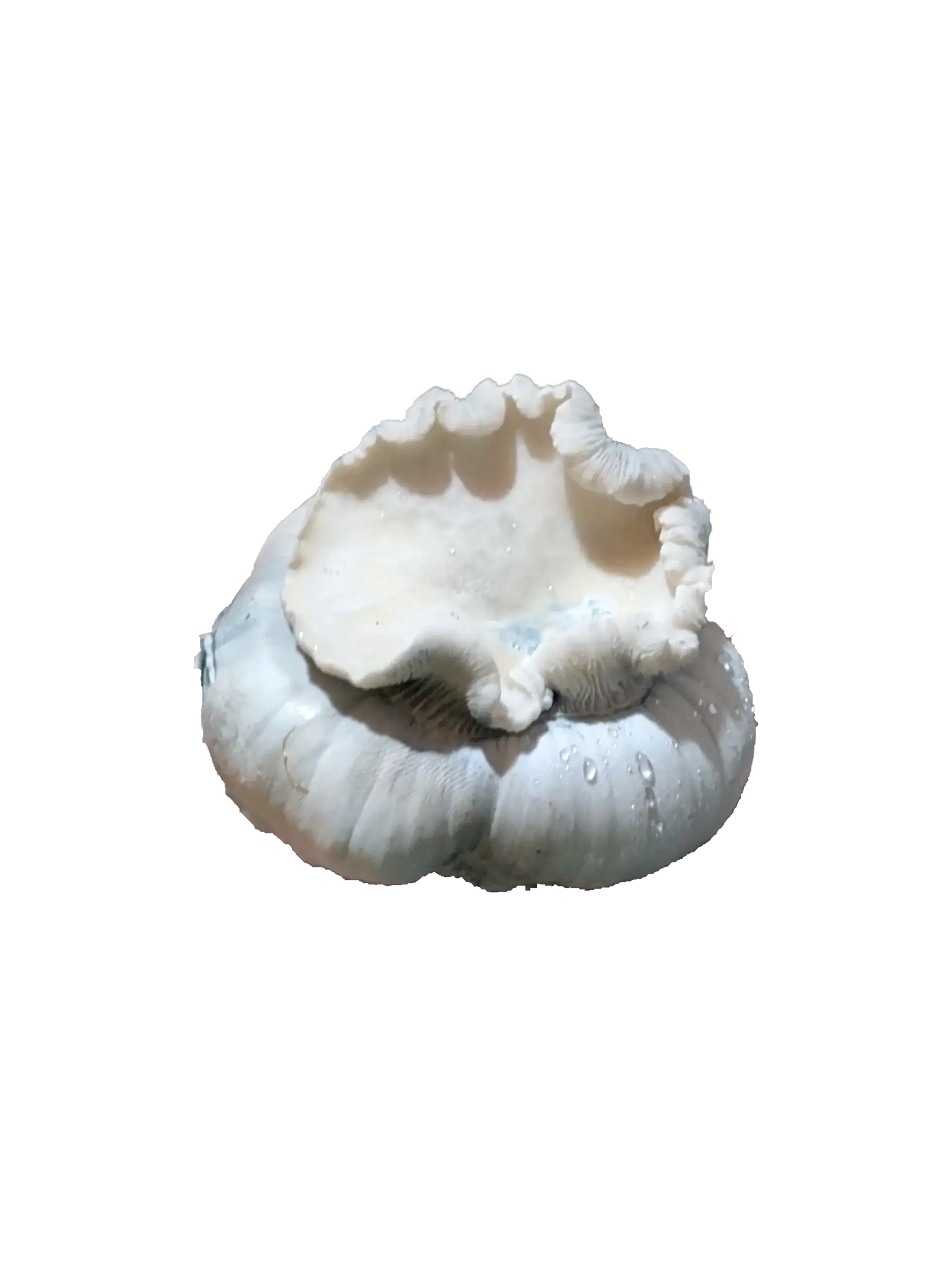
Melmac Penis Envy contributed the other half of the equation. As a variant of the original Penis Envy isolation, Melmac is known for its distinctive wavy caps and exceptional density. The PE lineage carries genetics that produce compact, thick-stemmed fruiting bodies with research characteristics that standard cubensis strains simply don't match. The tradeoff has always been slower colonization and greater sensitivity to environmental conditions.
Bluey Vuitton combined these genetics to capture the best of both worlds: Panama's speed and resilience with Melmac's density and potency. The albino isolation that created ABV added one more layer: true albino characteristics that produce the ghostly white specimens this strain is known for, without the unpredictable growth patterns that plague some leucistic varieties.
What Each Parent Strain Contributes to ABV
From Panama: Fast colonization speed (typically 20-30% faster than PE varieties), temperature tolerance across a wider range, aggressive mycelial growth that resists contamination, and forgiving response to minor environmental fluctuations.
From Melmac PE: Compact, dense morphology with thick stems, the characteristic "squat" growth pattern, above-average potency for research applications, and the genetic stability that makes results predictable flush after flush.
From Albino Isolation: True albino pigmentation (not leucistic), consistent white coloration throughout development, clear spore characteristics for microscopy research, and stable expression of albino traits across generations.
Physical Characteristics: Identifying True ABV Specimens
Albino Bluey Vuitton has one of the most distinctive appearances in the cubensis world, and understanding what authentic ABV looks like helps you assess genetic quality and identify potential issues during cultivation.
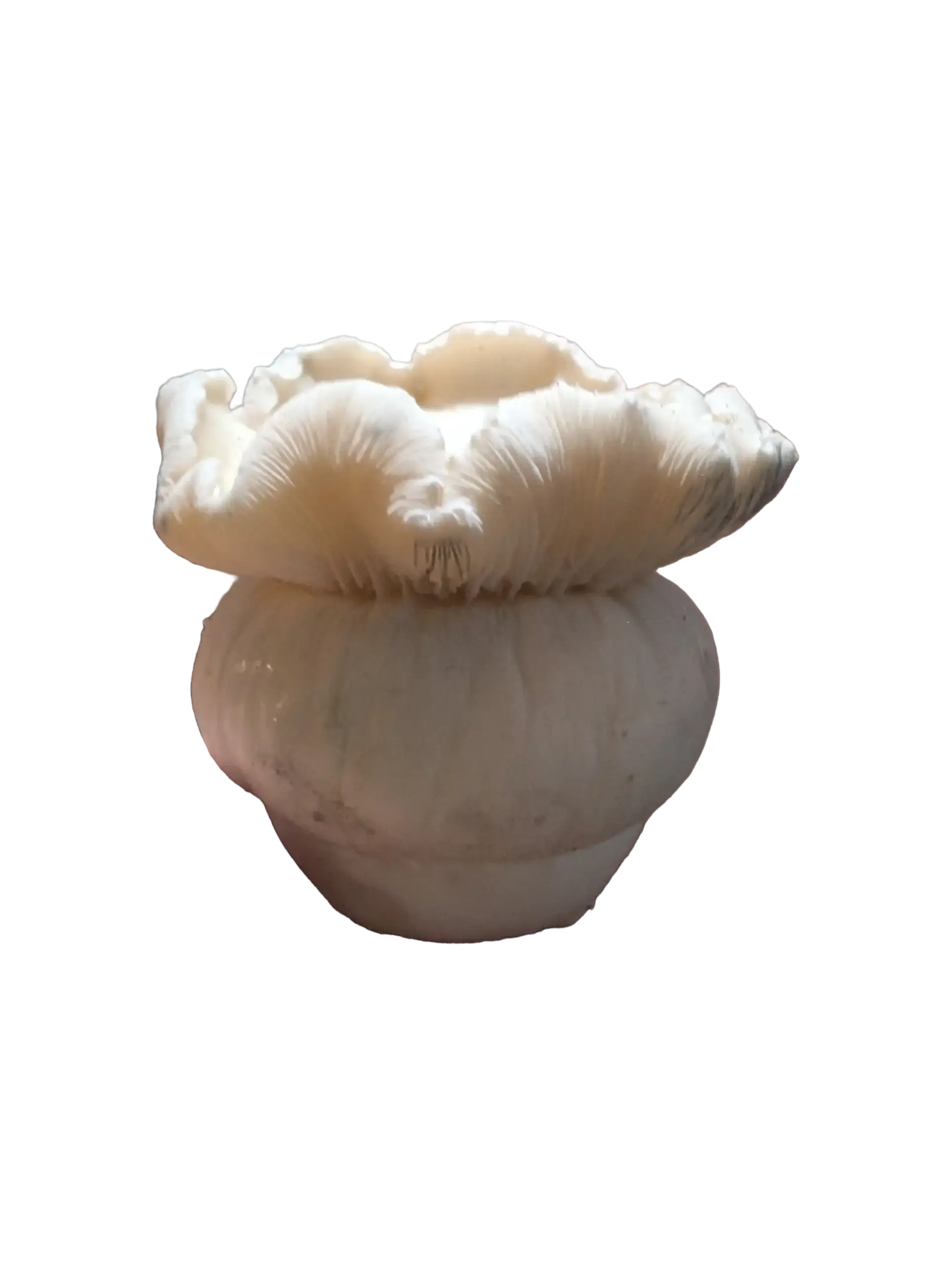
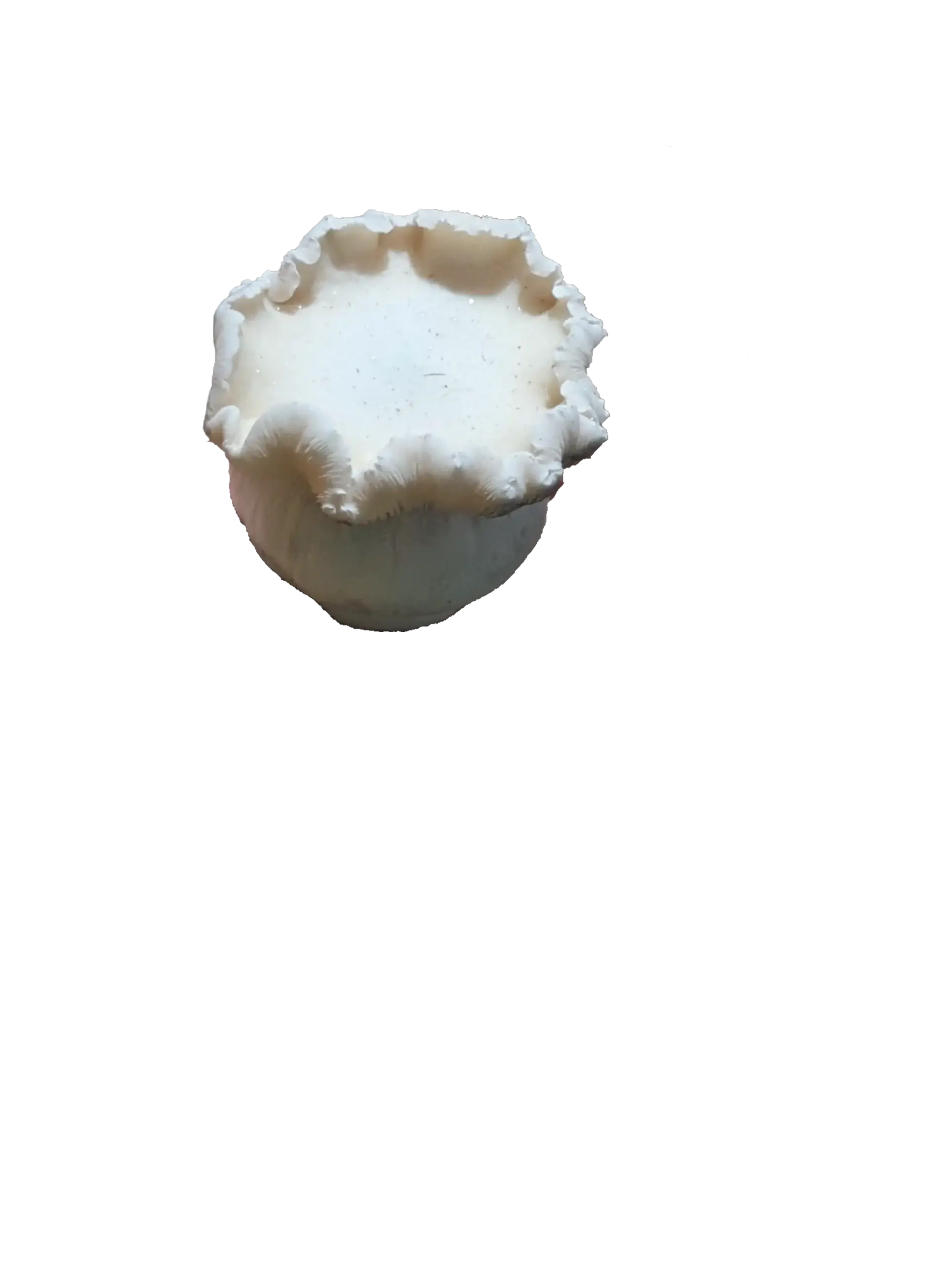
The most obvious characteristic is the squat morphology. Where most cubensis strains produce tall, slender fruiting bodies, ABV grows short and dense. Mature specimens typically reach only 3-5 inches in height but pack substantial mass into that compact frame. The stems are notably thick relative to their height, often approaching or exceeding the diameter of the cap.
Cap morphology in ABV tends toward convex shapes that flatten slightly at maturity but rarely develop the full umbrella shape common in taller varieties. The caps maintain a dense, meaty texture throughout development. Color remains consistently white to off-white, though some specimens may show very faint cream tones near the cap margins as they mature.
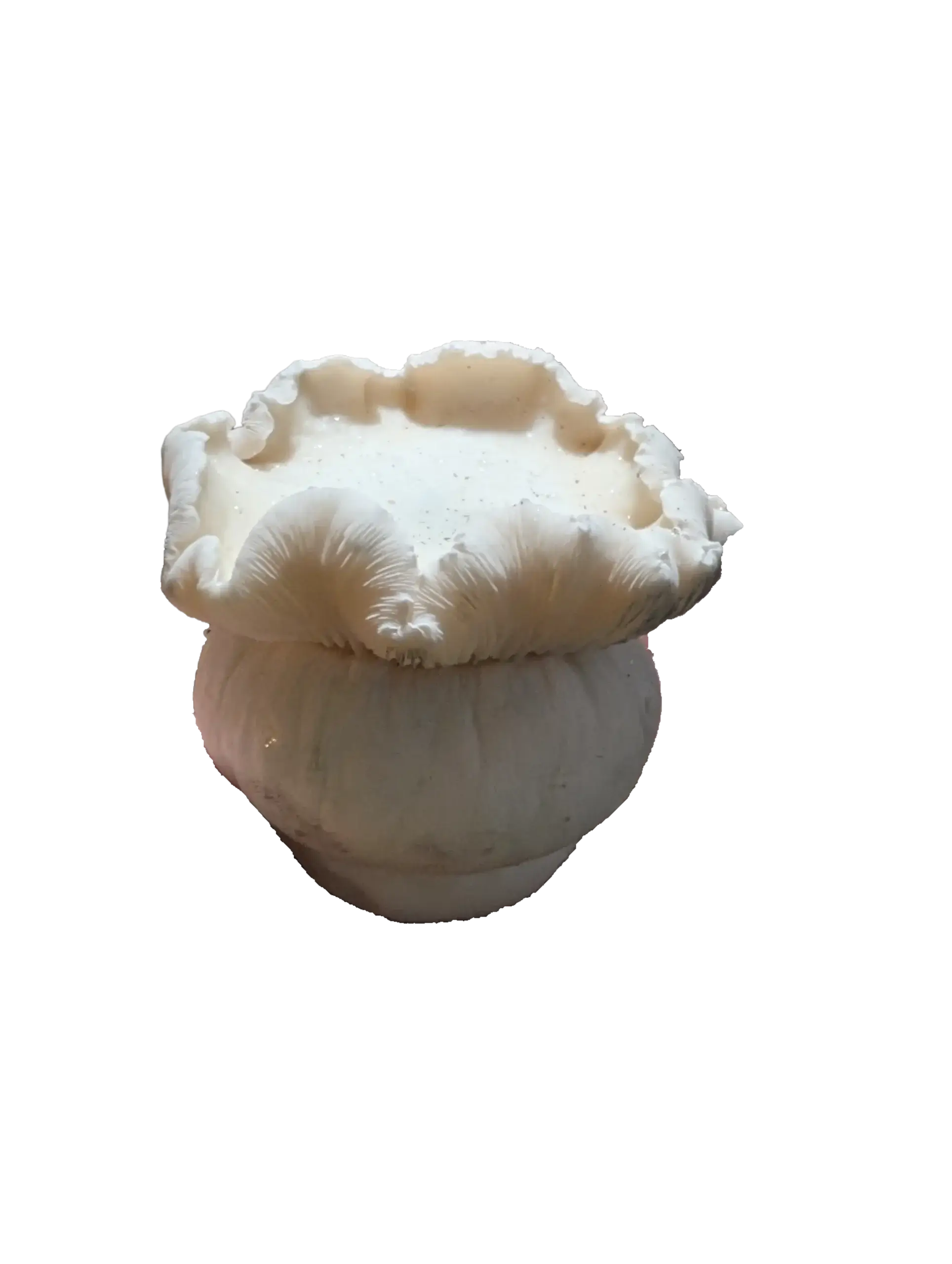
The stems deserve special attention because they're where ABV's Melmac PE heritage really shows. Expect thick, solid stems with minimal hollowing, a stark contrast to the hollow, fibrous stems common in many cubensis varieties. This density extends throughout the entire fruiting body and contributes to ABV's reputation for producing substantial specimens despite their compact size.
Bruising on ABV specimens appears as blue-green discoloration, same as other cubensis strains, though the contrast against white tissue makes it particularly visible. This can actually be useful for assessing handling damage and optimizing harvest techniques.
How ABV Compares to Similar Premium Strains
Choosing between premium albino strains often comes down to understanding the specific tradeoffs each genetic line offers. Here's how ABV stacks up against other popular options for microscopy research and cultivation study.
| Characteristic | Albino Bluey Vuitton | Jack Frost | Albino Penis Envy | Yeti |
|---|---|---|---|---|
| Difficulty Level | Easy-Moderate | Easy | Moderate-Advanced | Moderate |
| Colonization Speed | Fast (10-14 days) | Fast (10-14 days) | Slow (18-25 days) | Moderate (14-18 days) |
| Morphology | Short, squat, very dense | Tall, elegant, snow-capped | Thick, bulbous, compact | Medium height, dense |
| Typical Height | 3-5 inches | 5-8 inches | 3-5 inches | 4-6 inches |
| Potency (Relative) | Above Average | Average-Above Average | High | Above Average-High |
| Temperature Tolerance | Forgiving | Forgiving | Sensitive | Moderate |
| Contamination Resistance | Good | Good | Lower | Moderate |
| Flush Consistency | Very Consistent | Consistent | Variable | Consistent |
The key insight from this comparison: ABV occupies a unique middle ground. It delivers above-average potency and the dense morphology typically associated with more challenging PE variants, but inherits enough of Panama's resilience to remain accessible for less experienced cultivators. Jack Frost might be slightly easier overall, and Albino Penis Envy might edge out ABV on raw potency, but neither offers quite the same combination of traits.
Substrate Preparation and Equipment Setup
ABV performs well on standard cubensis substrates, though understanding why certain formulations work better helps optimize your results. The strain's Panama heritage means it colonizes aggressively on simple substrates, while its PE genetics benefit from the extra nutrition that enriched formulations provide.
For grain spawn, ABV colonizes rye berries, wheat berries, and oats with equal enthusiasm. The fast colonization speed inherited from Panama means you'll see visible mycelial growth within 3-5 days of inoculation under proper conditions. Whole oats tend to produce slightly faster colonization due to their higher moisture retention, while rye berries offer better resistance to wet rot if your hydration runs slightly high.
Bulk substrate options follow standard cubensis protocols. CVG (coir, vermiculite, gypsum) works reliably, though ABV responds particularly well to substrates with added gypsum. The calcium supplementation supports the dense fruiting body development that makes this strain distinctive. A ratio of 1 cup gypsum per 5 quarts of substrate provides adequate supplementation without affecting pH balance.
Recommended ABV Substrate Formulation
Grain Spawn: Whole oats or rye berries hydrated to 45-50% moisture content, sterilized at 15 PSI for 90 minutes. ABV colonizes both effectively, so choose based on your experience and equipment.
Bulk Substrate: 650g coco coir, 2 quarts vermiculite, 1 cup gypsum, hydrated to field capacity. Pasteurize at 160-180°F for 90 minutes or use bucket tek for simpler preparation.
Spawn Ratio: 1:2 to 1:3 spawn to substrate works well. Higher spawn ratios speed colonization but aren't necessary given ABV's naturally aggressive mycelial growth.
Equipment requirements are standard for cubensis cultivation. You'll need a still air box or flow hood for inoculation, a pressure cooker for grain sterilization (or pre-sterilized grain bags), monotub or similar fruiting chamber, and basic environmental monitoring. ABV doesn't require specialized equipment despite its premium genetics.
Inoculation Protocol for ABV
Inoculating ABV follows standard sterile technique with no special modifications required. The strain's contamination resistance means minor technique errors are less likely to result in failed jars, but maintaining proper sterility still maximizes success rates.
Work in a still air box or in front of a flow hood. Flame-sterilize your needle between jars and wipe injection ports with alcohol before puncturing. For grain jars, inject 0.5-1cc of spore solution per quart, distributing the inoculum across 2-4 injection points to speed colonization.
For agar work, ABV produces clean, rhizomorphic growth that's easy to isolate and transfer. Spore germination typically occurs within 5-7 days on standard malt extract agar. The mycelium shows strong sectoring behavior, making it straightforward to select the most aggressive growth for subsequent transfers.
ABV Inoculation Parameters
Spore Syringe Volume: 0.5-1cc per quart of grain. ABV spores germinate readily, and more isn't necessarily better and can increase moisture issues.
Inoculation Points: 2-4 points per jar, distributed around the circumference for even colonization spread.
Initial Temperature: 75-80°F for germination. ABV tolerates the higher end of this range well thanks to its Panama genetics.
Expected Germination: Visible mycelial growth within 3-7 days under optimal conditions.
Colonization Phase: What to Expect
ABV colonization moves faster than most PE-derived strains, typically completing grain colonization in 10-14 days under optimal conditions. This is where Panama's genetic contribution really shows: you get PE-adjacent potency without the 3-4 week colonization times that make traditional Penis Envy varieties so demanding.
The mycelium appears bright white with a slightly ropy, rhizomorphic character. Healthy ABV mycelium spreads aggressively from inoculation points, often showing visible daily progress. Unlike some strains that colonize slowly and evenly, ABV tends to establish strong mycelial networks quickly and then fill in gaps rapidly once the initial framework is in place.
Temperature during colonization can range from 72-82°F without significant issues. The sweet spot falls around 75-78°F, balancing colonization speed against contamination risk. Higher temperatures speed mycelial growth but also favor bacterial competitors. ABV's contamination resistance helps but isn't unlimited.
ABV Colonization Timeline
Days 1-3: Initial spore germination. Look for small white dots forming at inoculation points.
Days 4-7: Visible mycelial expansion from inoculation points. Growth should appear bright white and healthy.
Days 8-10: Rapid colonization phase. Mycelium spreads aggressively to cover 50-70% of grain surface.
Days 11-14: Final consolidation. Full colonization with no visible uncolonized grain. Allow 2-3 additional days after visual completion before spawning.
One note on consolidation: let your ABV grain spawn sit for 2-3 days after it appears fully colonized. This consolidation period allows the mycelium to fully penetrate grain kernels and build metabolic reserves for the fruiting phase. Rushing to spawn immediately after visual colonization often results in slower bulk colonization and weaker first flushes.
Want to compare colonization characteristics across different genetics? Our complete strain guide covers colonization speeds and behaviors for every variety we carry.
Fruiting Conditions for Optimal ABV Development
Transitioning ABV to fruiting conditions follows standard cubensis protocols with one important consideration: this strain's compact morphology means you'll see different pin development patterns than tall, slender varieties.
Introduce fruiting conditions once your bulk substrate shows 75-100% surface colonization. ABV typically shows faster surface colonization than bulk colonization, so don't be surprised if the surface appears fully colonized while the interior is still consolidating. Waiting for full colonization reduces the risk of contamination during the vulnerable pinning phase.
Temperature for fruiting should drop slightly from colonization temps, and 70-75°F works well for ABV. This modest temperature reduction helps trigger pin formation while maintaining the metabolic activity needed for healthy development. The strain tolerates brief excursions outside this range without significant issues, though sustained high temperatures can reduce flush yields.
ABV Fruiting Parameters
Temperature: 70-75°F (21-24°C). Slightly cooler than colonization to encourage pin formation.
Humidity: 85-95% during pinning, can reduce to 80-85% after pins establish. ABV tolerates humidity fluctuations better than most PE derivatives.
Fresh Air Exchange: 4-6 air exchanges per hour, or manual fanning 2-3 times daily. Adequate FAE prevents fuzzy feet and maintains the compact morphology ABV is known for.
Lighting: 12 hours indirect light, 12 hours darkness. Standard ambient room lighting works fine, and no special lighting required.
Pin formation in ABV looks different than standard cubensis strains. Instead of scattered individual pins, ABV often produces clusters of pins that emerge simultaneously from mycelial knots. These clusters develop into the characteristic dense groupings that make ABV harvests so satisfying. Expect initial pins 5-10 days after introducing fruiting conditions.
The compact morphology means ABV pins develop width before height. Where a Golden Teacher pin might stretch vertically early in development, ABV pins bulk up into dense little buttons before any significant height increase. Don't mistake this horizontal growth pattern for stalled development. It's normal for this strain.
Harvest Timing and Technique
Harvesting ABV requires attention to different indicators than you'd use for standard cubensis strains. The compact morphology and albino characteristics change the visual cues that signal optimal harvest timing.
The primary harvest indicator for ABV is veil condition. As with other cubensis strains, the partial veil connecting the cap margin to the stem will begin to stretch and tear as the cap expands. For ABV, harvest when the veil is stretched thin but hasn't fully separated, typically when you can see the first small tears beginning to form.
Cap shape provides secondary confirmation. Immature ABV specimens have distinctly convex caps that feel firm to gentle touch. As they approach maturity, caps flatten and soften slightly. The ideal harvest window catches specimens just as caps begin transitioning from convex to flat, with veils stretched but not broken.
ABV Harvest Indicators (In Order of Reliability)
Veil Condition: Stretched thin with early tearing visible. This is your primary indicator, so don't wait for full veil separation.
Cap Shape: Transitioning from convex to flat. Mature ABV caps never achieve the full umbrella shape of taller varieties.
Stem Firmness: Mature stems feel solid and dense with minimal give when gently squeezed. Spongy stems indicate the specimen isn't ready.
Cluster Development: For cluster harvests, wait until 75% of specimens in the cluster show veil stretching. Harvest the entire cluster together.
For harvest technique, ABV's dense stems respond better to cutting than twisting. Use a sterilized blade to cut stems cleanly at substrate level. Twisting can damage the dense mycelial networks that ABV forms and reduce subsequent flush yields. If stems are clustered tightly, harvest the entire cluster as a unit and separate individual specimens afterward.
Post-harvest, ABV specimens dry efficiently due to their compact morphology. The dense tissue releases moisture more slowly than hollow-stemmed varieties, so allow extra drying time and verify specimens are cracker-dry before storage. Properly dried ABV specimens should snap cleanly without bending.
Troubleshooting ABV-Specific Issues
While ABV is genuinely more forgiving than many premium strains, certain issues appear more frequently with this particular genetic line. Understanding these ABV-specific challenges helps you address problems before they impact yields.
Overlay and Stroma Formation
ABV's aggressive mycelial growth occasionally produces overlay, a dense, waxy mycelial mat that resists pinning. This is more common with ABV than standard cubensis strains due to its PE genetics.
Prevention: Introduce fruiting conditions slightly earlier than you would with standard strains, at 75% surface colonization rather than waiting for 100%.
Treatment: Gently score the overlay surface with a sterilized fork, creating shallow scratches that break the mat and expose fresh mycelium. Increase FAE temporarily.
Blob Mutations (Enigma-like Growths)
Some ABV genetics occasionally produce "blobs," which are dense, lumpy masses that don't develop into normal fruiting bodies. This isn't contamination; it's a genetic expression that appears in some PE-derived lines.
Prevention: Source genetics from reputable suppliers who maintain stable isolated lines. Random multispore syringes show higher blob rates than isolated genetics.
Treatment: Blobs can be harvested and are typically potent, but if you prefer normal fruiting bodies, remove blobs and subsequent flushes usually produce standard morphology.
Slow Pinning Despite Full Colonization
ABV sometimes shows excellent colonization but delayed pin formation. This often relates to insufficient temperature drop or inadequate fresh air exchange during fruiting initiation.
Prevention: Ensure a clear 5-10°F temperature drop when transitioning from colonization to fruiting conditions. Verify FAE is adequate.
Treatment: Cold shock by reducing temperature to 60-65°F for 12-24 hours, then return to normal fruiting temps. Increase FAE frequency temporarily.
Small Fruiting Bodies Despite Healthy Mycelium
Undersized ABV specimens usually indicate nutritional deficiency in the substrate or excessive moisture competing with fruiting body development.
Prevention: Use substrate formulations with adequate gypsum supplementation. Maintain field capacity moisture, not wetter.
Treatment: For subsequent flushes, reduce misting frequency and ensure substrate isn't waterlogged. Consider light casing with a gypsum-enriched layer.
Frequently Asked Questions
Is Albino Bluey Vuitton actually beginner-friendly, or is that just marketing?
ABV genuinely falls on the easier end of the premium strain spectrum. Its Panama genetics provide faster colonization and better contamination resistance than pure PE lines, making common beginner mistakes less likely to result in total failure. That said, "beginner-friendly for a PE-derived strain" is different from "as easy as Golden Teacher." If you've never cultivated anything before, starting with a standard strain builds skills that transfer to ABV. If you have basic cultivation experience and want to step up to premium genetics without a steep difficulty increase, ABV is an excellent choice.
How does ABV potency compare to standard cubensis strains?
ABV consistently tests above average for cubensis, though below pure APE. The Melmac PE contribution increases alkaloid concentration compared to standard varieties, while the Panama genetics dilute this slightly from pure PE levels. Expect research characteristics roughly 1.5-2x standard cubensis strains like Golden Teacher or B+. Individual specimen variation exists, with denser, more compact specimens typically showing stronger characteristics.
Why are my ABV specimens growing tall and thin instead of short and squat?
Stretched, elongated ABV specimens usually indicate insufficient fresh air exchange. When CO2 levels remain elevated, mushrooms stretch toward fresher air, overriding their genetic tendency toward compact growth. Increase fanning frequency or adjust your monotub FAE holes. Lighting quality can also contribute: dim conditions or light from only one direction encourage vertical stretching.
Can I use ABV spores for microscopy research?
ABV produces excellent specimens for microscopy study, with one caveat: albino spores are clear rather than purple-black, which changes observation techniques. The spores themselves are fully formed and viable but require phase contrast or staining techniques to observe clearly under standard microscopy. The clear spores actually offer some advantages for certain research applications, allowing observation of internal spore structures not visible with pigmented varieties.
How many flushes can I expect from ABV?
Under good conditions, ABV typically produces 3-4 productive flushes before yields drop significantly. The first and second flushes are usually largest, with subsequent flushes producing fewer but often denser specimens. Total yields compare favorably to other PE-derived strains, with the compact morphology meaning more mass per square inch of substrate surface than taller, thinner varieties.
What's the difference between Albino Bluey Vuitton and regular Bluey Vuitton?
Regular Bluey Vuitton displays standard cubensis pigmentation (caramel to golden caps with purple-brown spores). Albino Bluey Vuitton is a true albino isolation of the same genetic line, producing white fruiting bodies and clear spores. Cultivation requirements are essentially identical, and both maintain the distinctive squat morphology inherited from the Panama/Melmac PE cross. The choice between them is primarily aesthetic and research-focus dependent.
Ready to Experience ABV's Unique Genetics?
Albino Bluey Vuitton combines the best traits of its legendary parent strains (Panama's reliable colonization and Melmac PE's exceptional density) into a single, visually stunning package. Whether you're documenting albino spore morphology or exploring hybrid genetics, ABV delivers consistent results worth adding to any research collection.
Get Albino Bluey Vuitton Spore SyringesFinal Thoughts on Cultivating Albino Bluey Vuitton
Albino Bluey Vuitton earned its reputation through nearly a decade of consistent performance across thousands of cultivation projects. Silly Cybin's original cross solved a real problem (making PE-adjacent characteristics accessible to cultivators who didn't want to wrestle with pure PE genetics), and the albino isolation added visual appeal without adding complexity.
The strain's success comes down to its balanced genetics. Panama provides the foundation: fast colonization, contamination resistance, and tolerance for the environmental variations that challenge less forgiving strains. Melmac PE contributes the characteristics that make ABV worth growing in the first place: dense fruiting bodies, compact morphology, and above-average potency that distinguish it from standard cubensis varieties.
For researchers interested in premium genetics without premium difficulty, ABV remains one of the most practical choices available. It rewards good technique with exceptional results while forgiving the minor mistakes that inevitably occur during cultivation. That combination of quality and accessibility explains why ABV continues to be one of the most requested strains in our collection nearly a decade after its creation.
Continue Your Mycology Research
- Complete Psilocybe Cubensis Strain Guide - Compare ABV with every strain in our catalog
- Leucistic vs Albino Genetics Explained - Understand the science behind ABV's true albino characteristics
- Jack Frost Cultivation Guide - Explore another popular albino variety with different growth characteristics
- Albino Penis Envy Cultivation Guide - Step up to pure PE genetics when you're ready for the challenge
- Yeti 168 Cultivation Guide - Another exceptional albino isolation for comparison research
- Shop ABV Spore Syringes - Premium isolated genetics ready for your research