

If you're just starting your mycology journey, you've probably heard about Golden Teacher. It's basically the poster child for beginner-friendly strains. But have you met Hillbilly? This Arkansas native is giving Golden Teacher a run for its money when it comes to ease of growth and reliability. Both strains are incredibly forgiving, grow at similar speeds, and produce consistent results, making them perfect first choices. So how do you pick between them? Let's break down everything you need to know about these two beginner superstars.
Ready to Start Your Beginner-Friendly Growing Journey?
Both Golden Teacher and Hillbilly deliver exceptional reliability and forgiving growth characteristics, each offering unique traits that showcase what makes Psilocybe cubensis such a rewarding subject for microscopy research. These premium beginner strains represent the perfect entry point into mycology, offering both consistent results and engaging cultivation experiences for serious microscopy enthusiasts.
Get Golden Teacher Spores Get Hillbilly SporesWhat We'll Cover
- The Quick Answer: Which Should You Choose?
- Origins & Background
- Visual Characteristics
- Growth Difficulty & Speed
- Side-by-Side Comparison
- Environmental Requirements
- Contamination Resistance
- Yield Potential
- Which Should You Choose?
- Frequently Asked Questions
The Quick Answer: Which Should You Choose?
Here's the honest truth: you can't go wrong with either strain. Both Golden Teacher and Hillbilly are genuinely beginner-friendly, grow at nearly identical speeds, and handle mistakes gracefully. The main difference? Golden Teacher has decades of documentation and community support behind it, while Hillbilly brings that exciting "hidden gem" energy with its wild Arkansas genetics and rugged adaptability.
Choose Golden Teacher If:
- You want a strain with extensive documentation and community resources
- You appreciate the classic golden-capped aesthetic
- You prefer high spore production for multiple research projects
- You want the "tried and true" option that everyone recommends
Choose Hillbilly If:
- You like the idea of working with a landrace strain with wild genetics
- You want slightly better contamination resistance
- You prefer compact, dense fruiting bodies with thick stems
- You enjoy being the person who discovers something before it's mainstream
Origins & Background
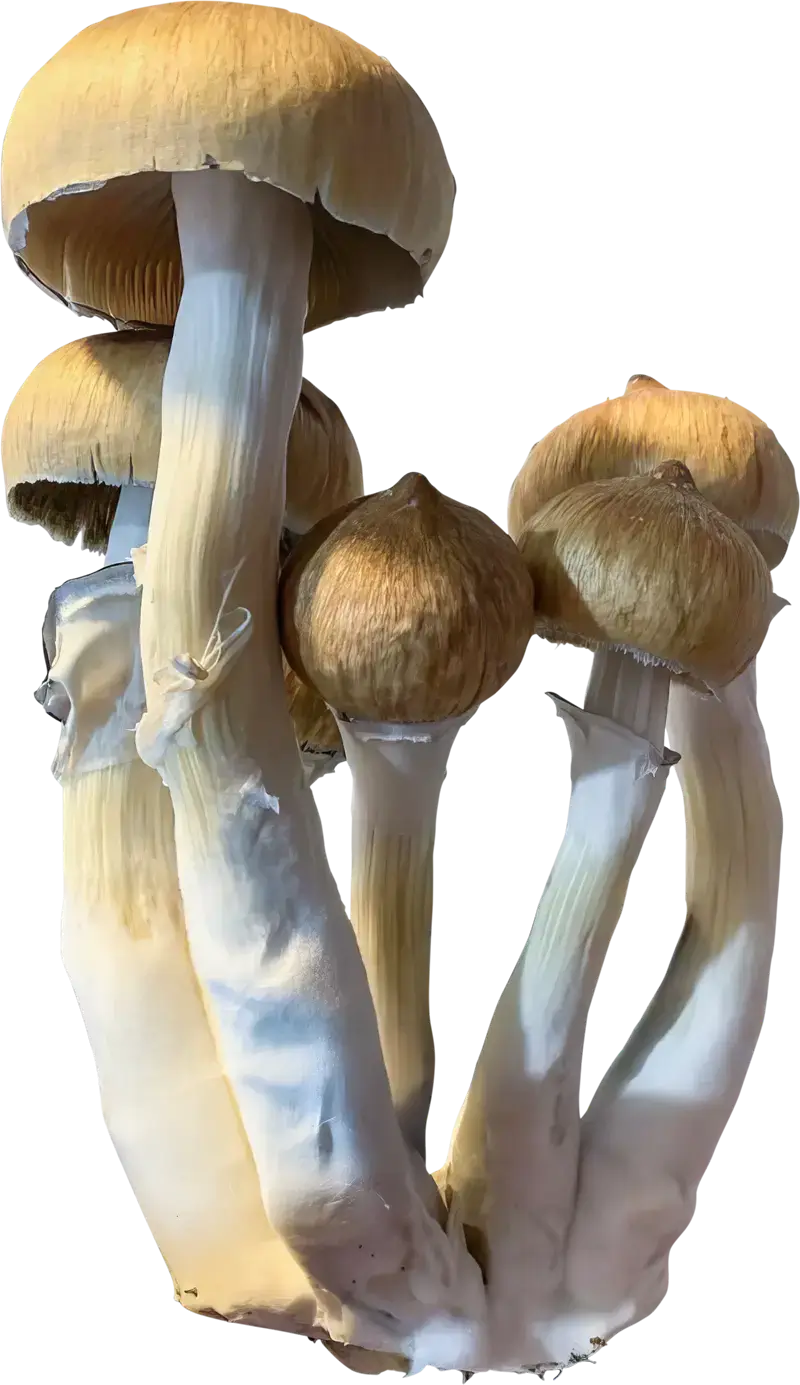
Golden Teacher emerged in the late 1980s, though its exact origin remains somewhat mysterious. Most accounts suggest it was discovered growing wild in the Gulf Coast region, possibly on cattle pastures. The name "Golden Teacher" comes from its distinctive golden-colored caps and reputation for providing insightful experiences. Over the past 35+ years, it's been cultivated, documented, and refined into one of the most reliable strains available.
What makes Golden Teacher special is this extensive history. When you're growing it, you're working with genetics that have been tested by thousands of cultivators across decades. There's a reason it became the standard recommendation for beginners. It just works, consistently and predictably.
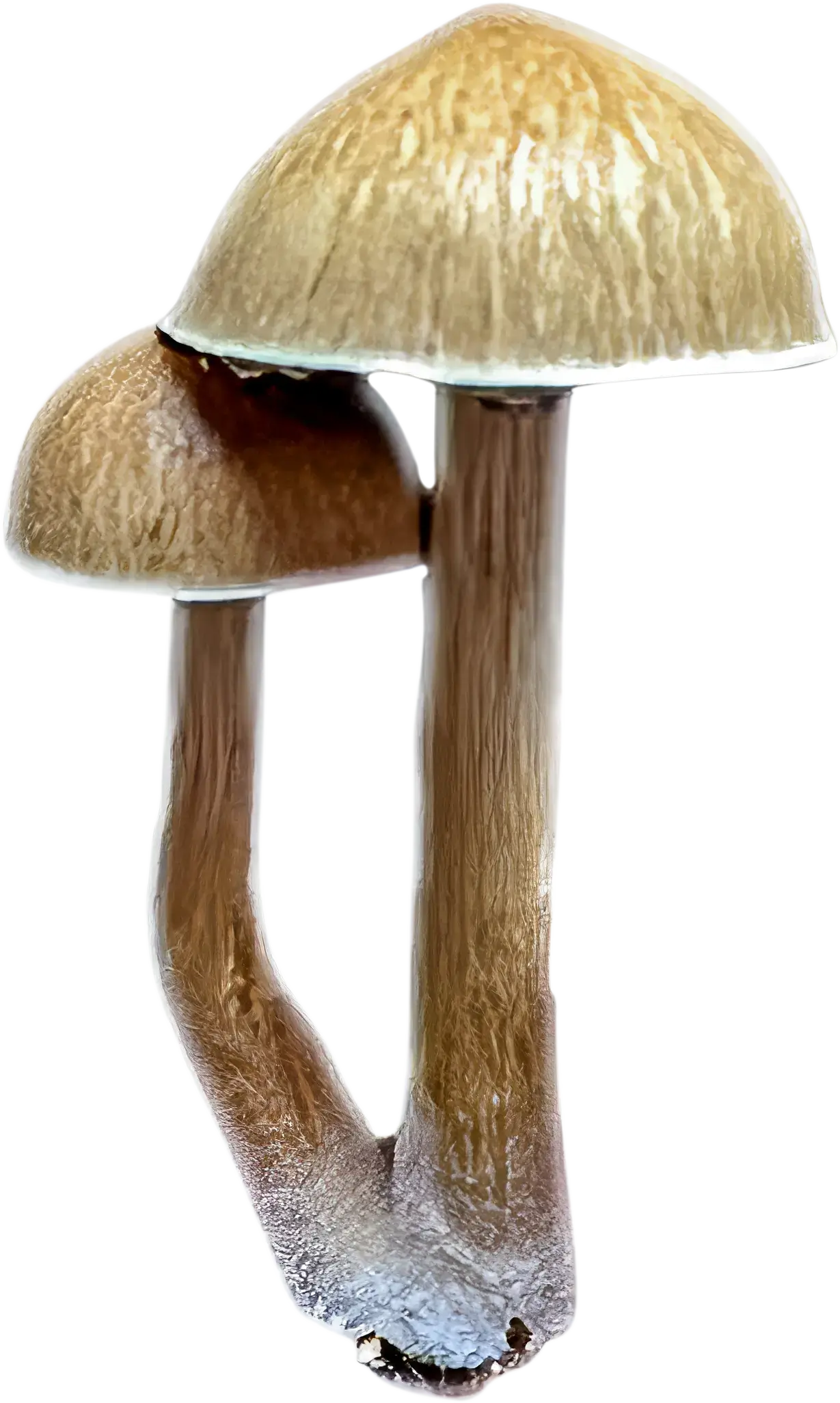
Hillbilly mushrooms tell a different story. This is a landrace variety discovered in the dense woodlands of Arkansas, meaning it adapted naturally to its environment rather than being selectively bred in laboratory settings. Through natural selection in the wild, Hillbilly developed strong genetic stability and remarkable environmental adaptability. It thrives in fluctuating temperatures and humidity conditions that might stress other strains.
Think of Hillbilly as the scrappy underdog with wild genetics that make it incredibly resilient. While it doesn't have the same extensive documentation as Golden Teacher, cultivators who work with it consistently report impressive contamination resistance and reliable fruiting. It's gaining popularity fast among mycologists who appreciate working with genetics that haven't been over-domesticated.
Visual Characteristics
This is where these two strains really differentiate themselves aesthetically.
Golden Teacher Appearance
- Caps: Distinctive caramel-to-golden coloration, 1-2 inches in diameter when mature
- Stems: Long and slender, reaching 4-6 inches in height
- Overall Look: Elegant, classic mushroom appearance with that iconic golden glow
- Spores: Purple-brown spores that produce heavy spore prints
- Veil: White partial veil that creates a ring on the stem when it breaks

Hillbilly Appearance
- Caps: Compact reddish-brown caps with a more subdued color palette
- Stems: Thick, dense white stems that look incredibly robust
- Overall Look: Stocky, substantial mushrooms with a "wild" appearance
- Spores: Purple-brown spores with lower sporulation (less messy)
- Growth Pattern: Dense fruiting bodies that maximize biological efficiency
If you're drawn to the classic golden aesthetic that screams "magic mushroom," Golden Teacher wins on pure visual appeal. But if you appreciate that thick, chunky look that suggests serious potency and resilience, Hillbilly's compact structure is incredibly satisfying to work with.
Growth Difficulty & Speed
Here's where things get interesting because honestly, they're almost identical in difficulty and speed. Both strains colonize at similar rates and fruit reliably under standard conditions.
Golden Teacher Growth Profile
- Colonization Time: 10-14 days for grain spawn, 2-3 weeks for bulk substrate
- Pinning Time: 7-14 days after introducing fruiting conditions
- Difficulty Level: Beginner-friendly, extremely forgiving of mistakes
- Consistency: Predictable growth patterns that follow documentation closely
- Substrate Versatility: Thrives on BRF cakes, CVG mix, manure-based substrates
Hillbilly Growth Profile
- Colonization Time: 2-4 weeks (similar overall timeline to Golden Teacher)
- Pinning Time: 7-14 days after introducing fruiting conditions
- Difficulty Level: Beginner-friendly, highly resilient to environmental fluctuations
- Consistency: Phenotypically stable genetics produce reliable results
- Substrate Versatility: Particularly adaptable to various substrate types
The user experience with both strains is remarkably similar. You'll see healthy white mycelium spreading across your substrate at a steady pace. Both colonize grain spawn efficiently and transition to bulk substrate without fuss. The main advantage Hillbilly brings is slightly better handling of temperature fluctuations. If your environment isn't perfectly controlled, those wild genetics kick in.
Want the best of both worlds? Leucistic Golden Teacher offers Golden Teacher reliability with unique pale coloration.
Explore Leucistic Golden TeacherSide-by-Side Comparison
Let's put all the key characteristics side by side so you can see exactly how these strains stack up:
| Characteristic | Golden Teacher | Hillbilly |
|---|---|---|
| Difficulty Level | Beginner (Very Easy) | Beginner (Very Easy) |
| Colonization Speed | 10-14 days | 14-21 days (similar overall) |
| Contamination Resistance | Good | Excellent |
| Environmental Sensitivity | Low | Very Low |
| Spore Production | High (heavy prints) | Low-Medium (cleaner) |
| Cap Color | Golden-caramel | Reddish-brown |
| Stem Thickness | Slender (4-6 inches) | Thick & dense |
| Fruiting Body Size | Tall & elegant | Compact & dense |
| Potency | Moderate | Moderate |
| Yield Potential | High | High |
| Genetic Background | Domesticated (35+ years) | Landrace (wild genetics) |
| Community Support | Extensive documentation | Growing popularity |
| Best For | First-time growers wanting proven genetics | Beginners who value resilience |
Environmental Requirements
Both strains follow standard Psilocybe cubensis requirements, but there are subtle differences in how forgiving they are.
Optimal Conditions (Both Strains)
- Colonization Temperature: 24-27°C (75-80°F)
- Fruiting Temperature: 21-24°C (70-75°F)
- Humidity: 85-90% during fruiting
- Fresh Air Exchange: 3-4 times per hour
- Light: Indirect light, 12-hour cycle
Where Hillbilly really shines is in suboptimal conditions. Its landrace genetics mean it evolved to handle the unpredictable Arkansas climate: hot, humid summers and cooler nights. If your temperature control isn't perfect or your humidity drops a bit, Hillbilly keeps trucking along. Golden Teacher is also forgiving, but it appreciates more consistency in your environment.
For someone growing in a spare closet without sophisticated climate control, Hillbilly's adaptability can make the difference between a successful flush and a stressed mycelium. But if you've invested in a proper fruiting chamber with reliable temperature and humidity management, both strains will reward you equally.
Contamination Resistance
Contamination is the beginner's biggest fear, and both of these strains offer solid resistance, but Hillbilly has a slight edge.
Why Hillbilly Resists Contamination Better
- Natural selection in the wild favored contamination-resistant genetics
- Dense mycelial network colonizes quickly, outcompeting potential contaminants
- Lower sporulation means less mess and fewer opportunities for contamination during spore release
- Robust colonization even in less-than-sterile conditions
Golden Teacher isn't slouchy in this department either. It's been cultivated for so long that weak genetics have been selected out, leaving you with vigorous mycelium that colonizes reliably. The high spore production can create more mess when mushrooms mature fully, which sometimes increases contamination risk in subsequent flushes, but this is easily managed with proper harvesting timing.
For absolute beginners still perfecting their sterile technique, Hillbilly's extra contamination resistance provides valuable insurance. But with proper technique (working in a still air box, using isopropyl alcohol, pasteurizing substrate correctly), both strains perform excellently.
Yield Potential
Both strains are generous producers when given proper conditions, though they achieve their yields slightly differently.
Golden Teacher Yields
- Produces multiple flushes (typically 3-5) with proper substrate hydration
- First flush often delivers the largest individual specimens
- Tall, slender mushrooms create visual abundance
- Heavy spore production enables easy spore collection for future projects
- Consistent flush-to-flush production
Hillbilly Yields
- Dense fruiting bodies maximize biological efficiency per mushroom
- Compact growth means more mushrooms per square inch
- Thick stems contribute to overall weight yield
- Multiple flushes with strong contamination resistance throughout
- Phenotypic stability ensures consistent production across flushes
In practical terms, you're looking at similar overall yields from both strains when working with equivalent substrate volumes. Golden Teacher might give you slightly taller mushrooms that look impressive, while Hillbilly produces stockier specimens that feel substantial in hand. Either way, with proper care during colonization and fruiting, both strains deliver rewarding yields that justify the time investment.
Which Should You Choose?
Let me break down the real decision-making factors based on what matters most to you.
Choose Golden Teacher If You Value:
- Documentation & Support: Decades of cultivation reports, troubleshooting guides, and community wisdom available online. Whatever issue you encounter, someone has solved it with Golden Teacher.
- Classic Aesthetic: Those golden caps are iconic for a reason. They're beautiful specimens that photograph well and look exactly like what you imagine when you think "magic mushroom."
- Spore Collection: If you're interested in making your own spore prints for future research or sharing with others, Golden Teacher's heavy sporulation is ideal.
- Proven Track Record: Sometimes the safe bet is the right bet. There's comfort in knowing you're working with the most recommended beginner strain in mycology.
Choose Hillbilly If You Value:
- Environmental Resilience: If your growing environment isn't perfectly controlled, Hillbilly's landrace genetics handle fluctuations with impressive grace.
- Contamination Insurance: That extra layer of contamination resistance can be invaluable when you're still perfecting sterile technique.
- Unique Genetics: Working with a landrace strain feels different. You're cultivating genetics that evolved naturally rather than being domesticated in labs.
- Compact Aesthetics: If you appreciate thick, dense mushrooms with substantial stems, Hillbilly's morphology is incredibly satisfying.
- Less Mess: Lower spore production means cleaner harvests and less spore dust covering your fruiting chamber.
Honestly, if you can't decide, consider getting both. You can Buy Hillbilly Spore Syringe and Buy Golden Teacher Spore Syringe directly from Atlas Spores — both ship within 24 hours with verified genetics. Running them side-by-side gives you firsthand experience comparing their characteristics, and you'll learn twice as much about cultivation variables through direct observation.
Frequently Asked Questions
Are Golden Teacher and Hillbilly truly the same difficulty level for beginners?
Yes, both strains are genuinely beginner-friendly with similarly forgiving growth characteristics. Golden Teacher has more documentation available, which can be helpful for troubleshooting, while Hillbilly's landrace genetics provide slightly better environmental resilience. In practice, if you follow basic cultivation procedures, both strains deliver consistent results for first-time growers. The main difference is that Hillbilly handles minor mistakes (like temperature fluctuations) a bit better due to its wild genetics.
Do Golden Teacher and Hillbilly require different substrate types?
No, both strains thrive on the same substrate types: BRF cakes, CVG mix (coco coir, vermiculite, gypsum), or manure-based bulk substrates. Hillbilly shows slightly better adaptability across different substrate compositions due to its landrace heritage, but Golden Teacher performs excellently on all standard substrates as well. Choose your substrate based on your experience level and available resources rather than strain requirements.
Which strain produces better yields for beginners?
Both strains offer comparable yields when given proper conditions. Golden Teacher produces taller, more elegant mushrooms with high spore production, while Hillbilly creates compact, dense fruiting bodies that maximize biological efficiency. Total weight yields across multiple flushes tend to be similar. Your yield success depends more on proper substrate preparation, maintaining optimal fruiting conditions, and harvest timing than on choosing between these two strains.
Can I grow Golden Teacher and Hillbilly in the same fruiting chamber?
Absolutely! Since both strains require identical environmental conditions (21-24°C temperature, 85-90% humidity, 12-hour light cycle), they coexist perfectly in the same fruiting chamber. Growing them side-by-side actually provides a great learning opportunity. You can directly compare colonization speeds, pinning patterns, and fruiting characteristics. Just maintain proper sterile technique when handling different substrates to prevent cross-contamination.
Is Hillbilly actually more contamination-resistant than Golden Teacher?
Yes, Hillbilly demonstrates slightly better contamination resistance due to its landrace genetics that evolved through natural selection in the wild. Its dense mycelial network colonizes aggressively, outcompeting potential contaminants more effectively. However, Golden Teacher is also quite resistant. It's been selectively cultivated for decades, eliminating weak genetics. With proper sterile technique, both strains perform excellently. Think of Hillbilly's advantage as extra insurance rather than a necessity for success.
Why is Golden Teacher more popular than Hillbilly if they're both equally easy to grow?
Golden Teacher gained prominence in the late 1980s and has had 35+ years to build its reputation, extensive documentation, and community support. It became the default recommendation for beginners, creating a self-reinforcing cycle of popularity. Hillbilly is a relative newcomer to widespread cultivation despite its wild Arkansas origins. As more cultivators discover Hillbilly's reliability and contamination resistance, its popularity is growing rapidly. The reality is both strains deserve beginner recommendation status. Golden Teacher just got there first.
Conclusion
So, Golden Teacher vs Hillbilly. Which is better for beginners? The truth is neither strain is "better" because they're both exceptional choices that deliver reliable, rewarding results for first-time growers.
Golden Teacher brings decades of proven performance, extensive documentation, and that iconic golden aesthetic. It's the safe bet that has guided countless mycologists through their first successful grows. You can't go wrong choosing the strain that's been recommended more than any other.
Hillbilly offers wild Arkansas genetics that translate to impressive environmental resilience and contamination resistance. It's the underdog that handles mistakes gracefully and rewards you with dense, substantial fruiting bodies. As more cultivators discover its reliability, it's rapidly earning its place among top beginner recommendations.
Both strains colonize at similar speeds, fruit reliably under standard conditions, and forgive beginner mistakes. Your choice really comes down to personal preference. Do you want the tried-and-true classic or the resilient wild strain? Honestly, you can't make a wrong choice here.
The best part? You don't have to choose just one. Atlas Spores offers both strains with verified genetics and laboratory-grade quality. Running them side-by-side doubles your learning experience and helps you discover which characteristics you prefer in your cultivation work.
Ready to Explore Beyond the Basics?
Once you've mastered Golden Teacher or Hillbilly, challenge yourself with Azul APE. A stunning blue-hued variation that takes your skills to the next level with more advanced growing requirements and exceptional visual appeal.
Get Azul APE SporesFurther Resources
Legal Disclaimer
This guide is provided strictly for educational and informational purposes only. Atlas Spores sells spore syringes and Isolations for microscopy and taxonomy research purposes only. The cultivation of psilocybin mushrooms is illegal in many jurisdictions worldwide. Always research and comply with local laws and regulations. Atlas Spores does not advocate for any illegal activities and assumes no responsibility for how this information is used.