
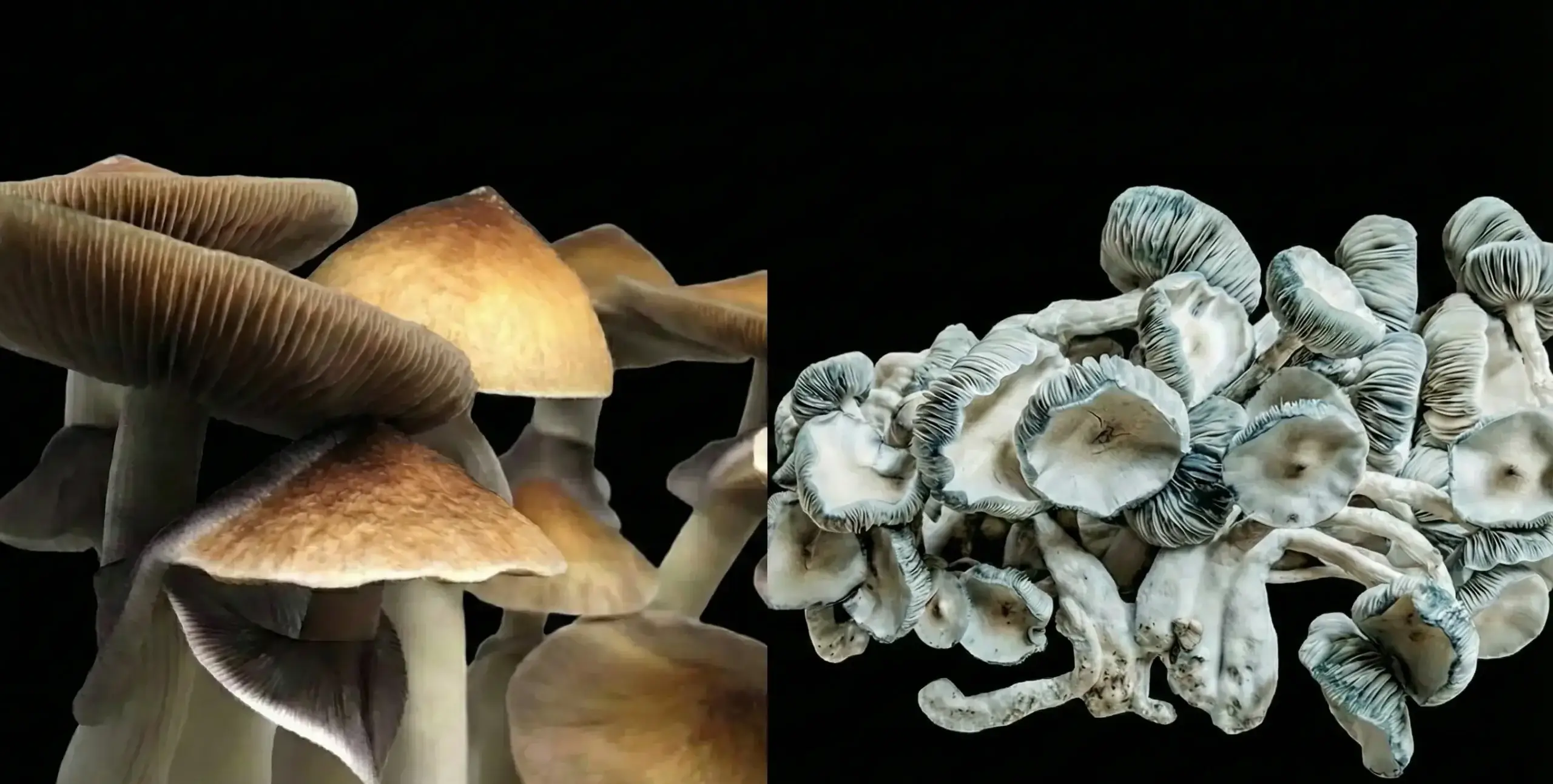
Choosing between mushroom strains can feel like standing at a crossroads with a dozen equally compelling paths stretching before you. Should you go with the beginner-friendly reliability of Golden Teacher or the stunning aesthetics of Jack Frost? Is Yeti 168's ghostly appearance worth the extra attention to detail compared to Cosmic Ghost Rider? And what exactly is the difference between leucistic and albino genetics anyway? If you've found yourself paralyzed by these questions while staring at spore catalogs, you're in the right place. I've spent years working with these remarkable organisms, and I've learned that the best way to understand strain differences isn't through isolated descriptions - it's through direct, side-by-side comparisons. This comprehensive guide breaks down the most important strain matchups, genetic concepts, and cultivation considerations to help you make informed decisions for your mycology research. Whether you're building your first collection or adding sophisticated genetics to an established library, these comparisons will give you the clarity you need.
Want to Experience the Full Spectrum of Cubensis Genetics?
Our Spore Bundle featuring Enigma, APE, and Golden Teacher gives you three distinctly different expressions of cubensis genetics in one collection. Compare a beginner-friendly classic against a true albino variety and an advanced mutation - the perfect trifecta for understanding how dramatically these organisms can vary while remaining the same species.
Get the Complete Comparison BundleWhat We'll Cover
- Why Strain Comparisons Matter
- Understanding Comparison Categories
- Complete Comparison Guide Directory
- Beginner-Friendly Strain Matchups
- Albino & Leucistic Comparisons
- Advanced Strain Comparisons
- Key Genetic Concepts Explained
- How to Compare Strains Yourself
- Frequently Asked Questions
Why Strain Comparisons Matter for Mycology Research
Here's something that might surprise you: most mushroom cultivation "advice" floating around online treats strains as interchangeable. You'll see generic growing guides that claim to work for "all cubensis varieties" or vague descriptions that could apply to dozens of different genetics. While it's true that all Psilocybe cubensis strains share fundamental requirements, the devil is absolutely in the details.
The difference between a mediocre grow and an exceptional one often comes down to understanding the subtle distinctions between strains. Golden Teacher, for instance, thrives with standard parameters and generous fresh air exchange. But if you apply those same conditions to Albino Penis Envy, you might find yourself dealing with aborted pins and frustrating results. APE prefers slightly different FAE patterns, tolerates lower humidity better, and fruits on a completely different timeline.
This is where direct comparisons become invaluable. When you examine two strains side-by-side - looking at their colonization speeds, pinning patterns, environmental preferences, and morphological characteristics - you develop an intuitive understanding of what makes each one tick. You learn to recognize the subtle cues that indicate when a strain is happy versus when it's struggling.
The Research Advantage of Comparative Analysis
Comparative analysis isn't just about choosing which strain to buy. It's about developing pattern recognition that makes you a better mycologist. When you understand how Jack Frost differs from APE (its parent strain), you gain insights into how genetic crosses express traits from both parents. When you compare leucistic versus albino genetics, you learn fundamental concepts about pigmentation mutations that apply across the entire mushroom kingdom. Each comparison builds your knowledge base in ways that isolated strain descriptions simply cannot.
For researchers building collections, comparisons help you avoid redundancy. There's no point in acquiring five strains that are functionally identical with slightly different names. But when you understand that Yeti 168 offers vigorous, reliable genetics while Cosmic Ghost Rider provides ethereal aesthetics with more challenging cultivation, you can build a collection that truly showcases genetic diversity rather than accumulating variations on the same theme.
Perhaps most importantly, strain comparisons help set realistic expectations. Beginners often get discouraged when their first grow doesn't match the stunning photos they've seen online - not realizing they chose an advanced strain that demands precision. Comparison guides help you match strains to your skill level, equipment, and goals, dramatically increasing your chances of success and satisfaction.
Understanding Comparison Categories
Not all strain comparisons are created equal. Some matchups are designed to help beginners choose their first genetics. Others explore subtle differences between closely related isolations that only experienced cultivators would appreciate. Understanding these categories helps you focus on the comparisons most relevant to your current situation.
Beginner vs. Beginner Comparisons
These matchups pit two beginner-friendly strains against each other, helping newcomers make informed first choices. Golden Teacher vs Hillbilly is a perfect example - both strains are forgiving, reliable, and produce excellent spore prints, but they have distinct characteristics that might appeal to different researchers. Golden Teacher offers classic aesthetics and moderate yields, while Hillbilly produces larger individual fruits with slightly faster colonization.
The value of these comparisons isn't determining which strain is "better" - it's understanding which better fits your specific situation. Do you have limited space and need dense, compact fruiters? Or do you have room for tall, impressive specimens? Are you primarily interested in spore collection and microscopy, or are you more focused on studying fruiting patterns and flush dynamics?
Albino & Leucistic Genetics Comparisons
Pigmentation mutations represent some of the most visually striking variations in cubensis genetics, but they also come with cultivation considerations that aren't immediately obvious. Our Leucistic vs Albino Genetics Guide breaks down the fundamental difference between these two types of mutations - information that's critical for understanding dozens of strains in the Atlas Spores catalog.
True albino strains like Albino Penis Envy, Jack Frost, and Yeti 168 produce zero pigment, resulting in pure white fruits that turn blue when bruised. They often produce fewer spores (sometimes none at all), may colonize slightly slower, and can be more sensitive to light exposure. Leucistic strains like Leucistic Golden Teacher retain some pigmentation, appearing pale golden rather than pure white, and typically maintain robust spore production and reliable genetics.
Comparisons between albino varieties - like Albino Penis Envy vs Jack Frost or Yeti 168 vs Cosmic Ghost Rider - help you understand how different genetic lineages express albinism. APE maintains the characteristic thick stems and small caps of Penis Envy genetics, while Jack Frost (a True Albino Teacher x APE cross) shows intermediate morphology with striking blue-tinged gills that make it instantly recognizable.
Parent Strain vs. Isolation Comparisons
Some of the most educational comparisons examine how isolation work transforms baseline genetics. When you compare Golden Teacher to Leucistic Golden Teacher, or Penis Envy to Albino Penis Envy, you're seeing the direct impact of selective breeding and genetic mutation. These comparisons teach you about stability, trait inheritance, and the art of isolation work - knowledge that becomes invaluable if you ever decide to work with agar cultures and create your own isolations.
Cross-Species Comparisons
While most comparisons focus on Psilocybe cubensis varieties, some of the most fascinating matchups involve closely related species. Comparing cubensis to Psilocybe natalensis or Psilocybe ingeli reveals how different species within the same genus can have dramatically different cultivation requirements, morphological characteristics, and growth patterns despite producing similar active compounds. These comparisons are particularly valuable for advanced researchers interested in taxonomy and evolutionary relationships between psilocybin-containing species.
Complete Comparison Guide Directory
Browse our complete library of mushroom strain comparison guides. This comprehensive table includes all published comparisons and planned future guides, organized by difficulty level and comparison type. Use this directory to quickly find the exact comparison you need, then dive into the featured in-depth analyses below for our most popular matchups.
| Comparison Guide | Difficulty Level | Comparison Type | Status |
|---|---|---|---|
| Golden Teacher vs Hillbilly | Beginner | Classic Strains | ✓ Published |
| Leucistic vs Albino Genetics | All Levels | Genetic Concepts | ✓ Published |
| Albino Penis Envy vs Jack Frost | Intermediate | Albino Varieties | ✓ Published |
| Yeti 168 vs Cosmic Ghost Rider | Intermediate-Advanced | Albino Varieties | ✓ Published |
| DCM-95 vs Albino Bluey Vuitton | Beginner | Modern Genetics | Coming Soon |
| Blue Meanie vs DCM-95 | Beginner-Intermediate | Fast Colonizers | Coming Soon |
| Golden Teacher vs B+ | Beginner | Classic Strains | Coming Soon |
| Avery Albino vs Cosmic Ghost Rider | Advanced | Albino Varieties | Coming Soon |
| Azul APE vs Albino Penis Envy | Intermediate | APE Lineage | Coming Soon |
| Jack Frost vs Yeti 168 | Intermediate | Cross-Lineage Albino | Coming Soon |
| Leucistic Golden Teacher vs Golden Teacher | Beginner-Intermediate | Parent vs Isolation | Coming Soon |
| Gandalf vs Squat Mac | Intermediate | Unique Morphology | Coming Soon |
| Hillbilly vs Minami Okinawa | Beginner-Intermediate | Heat Tolerant | Coming Soon |
| Psilocybe natalensis vs Psilocybe ingeli | Advanced | Cross-Species | Coming Soon |
| Enigma vs Traditional Cubensis | Advanced | Mutation Study | Coming Soon |
| Panaeolus cyanescens vs Psilocybe cubensis | Advanced | Cross-Genus | Coming Soon |
| Penis Envy vs Albino Penis Envy | Intermediate | Parent vs Mutation | Coming Soon |
| Cambodian vs Thai | Beginner-Intermediate | Regional Variants | Coming Soon |
This directory is regularly updated as new comparison guides are published. Check back frequently for the latest additions to our comparison library.
Featured Beginner-Friendly Strain Comparisons
If you're just starting your mycology journey, these featured comparisons provide in-depth analysis to help you choose genetics that set you up for success. Each matchup examines two strains that are suitable for beginners but have distinct characteristics worth understanding. For a complete list of all beginner comparisons, see the directory table above.
Golden Teacher vs Hillbilly: The Classic Decision
This is perhaps the most common decision point for new mycologists. Both strains have earned their reputations as beginner-friendly workhorses, but they appeal to slightly different preferences. Our comprehensive Golden Teacher vs Hillbilly comparison guide breaks down every aspect of these strains, but here's the quick version:
Golden Teacher is the quintessential beginner strain - reliable, forgiving, and widely documented. It produces beautiful golden-capped fruits, drops excellent spore prints, and tolerates minor mistakes without punishing you. Colonization proceeds at a steady, predictable pace, typically 14-21 days to full colonization under standard conditions. Yields are moderate but consistent across multiple flushes. If you want a strain that does exactly what you expect it to do, Golden Teacher delivers every time.
Hillbilly, collected from the Arkansas Ozarks, offers similar reliability but with some interesting differences. Fruits tend to be larger on average, with thick stems and substantial caps that make impressive specimens. Colonization is slightly faster - many growers report full colonization in 10-16 days. The tradeoff is that Hillbilly can be slightly more sensitive to temperature fluctuations, preferring the lower end of the standard range (72-76°F during fruiting rather than 76-80°F).
Which should you choose? If you value predictability and have limited climate control, go with Golden Teacher. If you have good temperature management and want impressive individual fruits, Hillbilly is your strain. Better yet, get both - comparing them side-by-side in identical conditions is incredibly educational.
DCM-95 vs Albino Bluey Vuitton: Modern Beginner Genetics
While Golden Teacher and Hillbilly represent classic beginner choices, DCM-95 and Albino Bluey Vuitton showcase what modern isolation work has achieved. Both are exceptionally beginner-friendly but represent different approaches to genetic selection.
DCM-95 was selected specifically for vigor and reliability. It colonizes aggressively, often outpacing even fast strains like B+ or Golden Teacher. Pinning is prolific, producing dense clusters of medium-sized fruits that maximize yields in limited space. If you're working with a small fruiting chamber or want to see results quickly, DCM-95 delivers impressive performance with minimal fuss.
Albino Bluey Vuitton combines beginner-friendly reliability with the visual appeal of albino genetics. Unlike some temperamental albino varieties, ABV maintains robust growth characteristics while producing stunning white fruits with distinctive blue hues when handled. It's proof that beginner-friendly doesn't have to mean boring - you can have both reliability and aesthetics in the same package.
Ready to experience premium albino genetics without the advanced cultivation challenges? Albino Bluey Vuitton offers the best of both worlds.
Explore Albino Bluey Vuitton SporesFeatured Albino & Leucistic Strain Comparisons
Pigmentation mutations represent some of the most sought-after genetics in mycology, and for good reason - there's something undeniably captivating about witnessing pure white fruits emerge from substrate. But albino and leucistic strains aren't just about aesthetics. They offer unique research opportunities and come with cultivation considerations you need to understand. Below are our most comprehensive albino and leucistic comparisons. For a complete list, refer to the directory table above.
Understanding the Genetic Basis: Leucistic vs Albino
Before diving into specific strain comparisons, it's crucial to understand what these terms actually mean. Our detailed Leucistic vs Albino Mushroom Genetics Guide provides the scientific deep-dive, but here's the essential distinction:
True albino strains carry genetic mutations that completely prevent pigment production. They produce pure white fruits that never develop any coloration beyond the characteristic blue bruising that indicates psilocybin presence. True albinos often produce fewer spores - sometimes dramatically fewer - because spore production is linked to pigmentation pathways. Examples include Albino Penis Envy, Jack Frost, Yeti 168, and Cosmic Ghost Rider.
Leucistic strains produce reduced pigmentation rather than none at all. They appear pale, often with ghostly golden or cream coloration, but retain some pigment production. Crucially, leucistic strains typically maintain normal spore production and often exhibit the same vigorous growth characteristics as their pigmented parent strains. Leucistic Golden Teacher is the classic example - all the reliability of Golden Teacher with ethereal pale aesthetics.
This distinction matters because it affects how you work with these genetics. True albinos often require tissue culture or liquid culture for propagation since they produce minimal spores. Leucistic strains give you the visual appeal of reduced pigmentation while maintaining practical spore collection capabilities.
Albino Penis Envy vs Jack Frost: Parent and Progeny
This is one of the most requested comparisons in advanced mycology, and our comprehensive APE vs Jack Frost guide explores every nuance. Both are true albinos with stunning appearances, but they represent different genetic lineages with distinct characteristics.
Albino Penis Envy maintains the characteristic Penis Envy morphology - extremely thick stems, small wavy caps, and dense, substantial fruits. It's a slower colonizer than average (18-25 days is typical) and produces minimal to zero spores, requiring liquid culture for most propagation. APE demands attention to detail but rewards careful cultivation with impressive fruits that showcase the most extreme expression of PE genetics.
Jack Frost is a cross between True Albino Teacher and APE, combining characteristics from both parents. The result is an intermediate morphology - thicker stems than typical cubensis but not quite as dense as pure APE, with beautiful albino caps and distinctive blue-tinged gills that make it instantly recognizable. Jack Frost colonizes faster than APE (14-21 days) and produces more spores, making it somewhat more practical for researchers while maintaining that striking albino aesthetic.
The choice between them often comes down to priorities. Want the most dramatic morphology and don't mind working with liquid culture? APE is unmatched. Prefer a slightly faster-growing albino with better spore production? Jack Frost delivers albino genetics in a more accessible package.

Yeti 168 vs Cosmic Ghost Rider: True Albino Teacher Lineage
Both of these strains trace their lineage to True Albino Teacher (TAT), but they've been isolated along different paths, creating distinct expressions of similar genetics. Our detailed Yeti 168 vs Cosmic Ghost Rider comparison explores the fascinating differences between these closely related isolations.
Yeti 168 represents a stabilized isolation of TAT selected for vigor and reliability. It maintains the ghostly white appearance of its TAT parent while offering more predictable growth characteristics. Colonization is reasonably robust (16-21 days), fruits develop in satisfying clusters, and the strain handles minor environmental fluctuations without excessive sensitivity. Yeti 168 is often recommended as a "gateway" true albino strain - challenging enough to be interesting but forgiving enough for intermediate cultivators.
Cosmic Ghost Rider took a different isolation path, selecting for ethereal aesthetics and distinctive morphology. The name perfectly captures the strain's appearance - wispy, elegant fruits that seem almost translucent in certain lighting. It's slightly more challenging than Yeti 168, with more specific environmental preferences (particularly regarding humidity and FAE) and a somewhat slower growth cycle. The reward is truly remarkable specimens that represent some of the most beautiful expressions of albino cubensis genetics.
For collectors, having both strains demonstrates how different isolation goals create distinct results from similar starting genetics. Yeti 168 prioritized practical cultivation characteristics, while Cosmic Ghost Rider emphasized aesthetic qualities. Both are "right" - they just serve different purposes in a comprehensive genetics collection.
Featured Advanced Strain Comparisons for Experienced Researchers
Once you've mastered the fundamentals with beginner and intermediate strains, these featured advanced comparisons open up new dimensions of mycological research. These matchups involve strains that demand precision, specialized techniques, or advanced understanding of mushroom biology. Additional advanced comparisons are listed in the directory above.
Enigma vs Traditional Cubensis: When Mutation Changes Everything
Enigma isn't just another strain - it's a dramatic mutation that produces thick, brain-like masses instead of traditional mushroom structures. This mutation completely changes the cultivation approach. Our comprehensive Enigma cultivation guide explores this fascinating genetics in depth.
Unlike traditional cubensis strains that fruit in predictable flushes, Enigma produces irregular blobs that can take weeks to fully develop. There are no caps, no gills, and therefore no spores - Enigma can only be propagated through tissue culture or liquid culture. Harvest timing is entirely different; you're watching for color changes and physical characteristics rather than veil breaks. Even the substrate requirements differ slightly, with Enigma benefiting from slightly higher casing layer depth.
Why work with such a challenging mutation? Because Enigma offers research opportunities impossible with traditional morphology. You're studying how genetic mutations affect fundamental organism structure, observing completely different developmental patterns, and working with genetics that push the boundaries of what we consider "normal" for the species. It's mushroom cultivation as both science and art.
Psilocybe cubensis vs P. natalensis vs P. ingeli: Species-Level Comparisons
While most of our comparisons focus on cubensis varieties, examining closely related species reveals fundamental differences in taxonomy, cultivation requirements, and morphological characteristics. These comparisons are particularly valuable for researchers interested in evolutionary relationships and species identification.
Psilocybe cubensis remains the baseline - cosmopolitan distribution, room-temperature cultivation, moderate difficulty, and extensive documentation. It's the most-studied and best-understood psilocybin-containing species in amateur mycology.
Psilocybe natalensis, only recently recognized as a distinct species from cubensis, shares similar active compounds but shows notable differences in cultivation. Our P. natalensis cultivation guide details these requirements. Natalensis typically fruits more prolifically than cubensis, producing impressive cluster formations, but prefers slightly different temperature ranges (68-74°F optimal versus cubensis's 70-76°F) and shows different pinning patterns.
Psilocybe ingeli, described as a distinct species only in 2024, represents the cutting edge of psilocybin taxonomy. Our P. ingeli species profile and cultivation guide explore this fascinating species. Ingeli demands more advanced technique than either cubensis or natalensis, with specific requirements for temperature, humidity, and substrate composition that leave little room for error.
Working with multiple species side-by-side teaches pattern recognition that makes you better at identifying what you're growing, understanding what different species need, and appreciating the diversity within the Psilocybe genus.
Panaeolus cyanescens vs Psilocybe cubensis: Beyond the Genus
Our Grasstree Panaeolus cyanescens strain represents a completely different cultivation approach. Pan-cyans belong to a different genus entirely (Panaeolus rather than Psilocybe) and require specialized techniques covered in our comprehensive Pan-cyan cultivation guide.
Unlike cubensis species which thrive on grain and coco coir substrates, Panaeolus cyanescens demands manure-based substrates, higher temperatures during colonization (80-85°F), and much more specific humidity control. The fruits are smaller, more delicate, and require different harvest timing. But researchers who master Pan-cyan cultivation gain access to significantly different genetics and active compound profiles than anything available in cubensis varieties.
This comparison isn't about choosing one over the other - it's about understanding that "magic mushroom cultivation" encompasses multiple genera, each with unique requirements and characteristics. Advanced researchers often maintain separate setups optimized for different genera, allowing them to work with the full spectrum of psilocybin-containing species.
The Value of Cross-Genus Experience
Working with both Psilocybe and Panaeolus species develops cultivation flexibility that makes you adaptable to any genetics. You learn to recognize the environmental cues that different organisms respond to, understand why certain substrates work for some species but not others, and develop troubleshooting skills that transfer across genera. This breadth of experience is what separates competent mycologists from true experts.
Key Genetic Concepts for Understanding Strain Differences
To really make sense of strain comparisons, you need to understand the underlying genetic concepts that create the differences we observe. Let's break down the most important principles that govern how cubensis strains vary and why those variations matter for cultivation.
Phenotype vs Genotype: What You See vs What's Encoded
This is Biology 101 but it's absolutely critical for understanding strain differences. Genotype refers to the actual genetic code - the DNA sequences that determine potential characteristics. Phenotype refers to the expressed characteristics you actually observe - cap color, stem thickness, colonization speed, and so on.
Here's why this matters: the same genotype can produce different phenotypes depending on environmental conditions. A strain might fruit with thick stems in one setup and thinner stems in another, even though the genetics are identical. This is why strain comparisons should ideally happen side-by-side in identical conditions - it eliminates environmental variables and lets you see true genetic differences.
When you see vendors claiming dramatic differences between similar strains, ask yourself whether those differences represent genuine genetic variation or environmental phenotypic expression. Sometimes what's marketed as a "unique strain" is just standard genetics grown under specific conditions.
Isolation and Genetic Stability
Modern strain development relies heavily on isolation techniques - selecting specific characteristics and propagating them through successive generations until they breed true. Understanding this process helps you evaluate strain claims and appreciate what goes into developing stable genetics.
When a cultivator isolates a strain, they're selecting for desired traits: maybe faster colonization, specific pigmentation, unusual morphology, or improved yields. Each generation of selection amplifies these traits while hopefully maintaining stability in other characteristics. A truly stable isolation breeds true across multiple generations, producing consistent results that match the strain's documented characteristics.
This is why strains from reputable sources often perform better than mystery genetics from unknown origins. Proper isolation work takes time, expertise, and careful documentation. Strains like Yeti 168, DCM-95, or Cosmic Ghost Rider represent years of selection work, not just a lucky single isolation.
Multispore vs Monoculture: Understanding Genetic Diversity
When you work with spore syringes, you're essentially working with multispore cultures - millions of spores, each with slightly different genetics. When these spores germinate and their hyphae fuse, you get incredible genetic diversity, even within a single "strain." This is why the same spore syringe can produce fruits with noticeable variation in size, color, or morphology.
Monoculture isolation - taking tissue from a single mushroom and cloning it - produces genetically uniform cultures. All fruits from that monoculture will be essentially identical (environmental factors aside). This is how breeders stabilize desirable traits and create consistent strain characteristics.
For research purposes, multispore cultures are valuable for observing genetic diversity and selecting your own isolations. Monocultures (or liquid culture isolations) are valuable for producing consistent, predictable results. Our spore syringe vs liquid culture comparison explores these differences in practical cultivation contexts.
Mutation Types and Their Impact
Understanding different mutation types helps you appreciate what makes certain strains unique. The most common mutations in cubensis cultivation include:
Albinism: Complete loss of pigment production, creating pure white fruits. Often linked to reduced spore production. Examples: APE, Jack Frost, Yeti 168.
Leucism: Reduced but not absent pigmentation, creating pale coloration while maintaining normal spore production. Example: Leucistic Golden Teacher.
Morphological mutations: Changes to physical structure like Enigma's blob formation or Penis Envy's thick-stemmed morphology. These can dramatically affect cultivation technique.
Growth rate mutations: Alterations affecting colonization speed or fruiting timeline. DCM-95's vigor likely reflects beneficial mutations affecting mycelial growth rate.
Each mutation type affects cultivation differently and offers unique research opportunities. Albinism teaches you about pigmentation pathways. Morphological mutations reveal organism developmental flexibility. Growth rate mutations demonstrate how organisms optimize for different ecological niches.
How to Compare Strains Yourself: A Methodological Approach
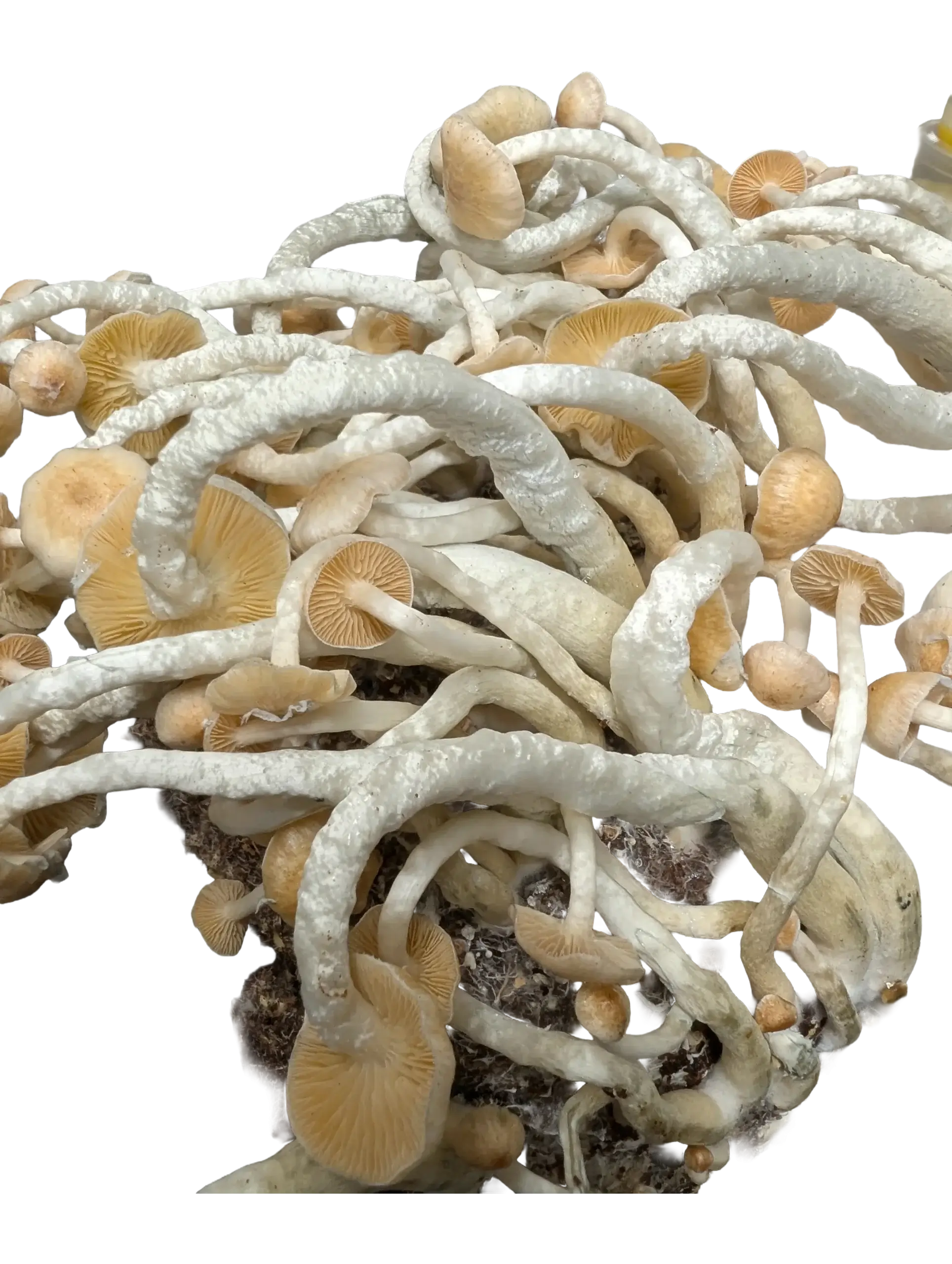
Reading comparisons written by others is valuable, but nothing beats conducting your own side-by-side strain tests. Here's how to set up meaningful comparisons that generate reliable data and accelerate your mycological education.
Experimental Design Basics
Good comparative research requires controlling variables so you're measuring genuine strain differences rather than environmental variations. The gold standard is growing multiple strains simultaneously under identical conditions:
Same substrate batch: Mix one large substrate batch and divide it among your test containers. This eliminates substrate composition as a variable.
Identical containers: Use the same size and type of container for each strain. Different container sizes affect fruiting patterns.
Same environmental conditions: Place all test containers in the same fruiting chamber or growing area, ensuring identical temperature, humidity, light, and FAE.
Consistent inoculation: Use similar amounts of spawn or liquid culture for each strain, inoculated on the same day with the same technique.
Thorough documentation: Take photos at regular intervals, record temperatures and humidity readings, note colonization progress, and track fruiting timeline from pinning through harvest.
What to Measure and Observe
Comprehensive strain comparisons should track multiple characteristics across the complete life cycle:
Colonization phase: Days to first visible growth, days to 25%/50%/75%/100% colonization, mycelial characteristics (rhizomorphic vs tomentose), resistance to contamination, and any unusual behaviors.
Pinning phase: Days from full colonization to first pins, pinning patterns (clustered vs scattered), pin density, pin size uniformity, and abort rate.
Fruiting phase: Days from pins to harvest-ready fruits, fruit morphology (cap shape, stem thickness, overall size), coloration and any unique visual characteristics, growth pattern changes across multiple flushes, and blue bruising intensity and patterns.
Harvest data: Fresh weight per flush, dried weight per flush, spore print quality and density (if producing spores), and number of productive flushes before exhaustion.
Subjective assessments: Overall aesthetic appeal, ease of cultivation, tolerance for mistakes, and whether the strain meets your research goals.
Common Comparison Pitfalls to Avoid
Even experienced mycologists sometimes draw incorrect conclusions from strain comparisons. Watch out for these common mistakes:
Sample size too small: Don't judge a strain based on a single grow or even a single batch. Genetics can express differently depending on numerous factors. Compare at least 2-3 containers per strain before drawing firm conclusions.
Unfair conditions: Testing a heat-loving strain in cold conditions or a humidity-sensitive strain in a dry environment doesn't tell you the strain is "bad" - it tells you the conditions were wrong for that genetics.
Confirmation bias: If you expect a strain to be difficult based on online reports, you might interpret normal challenges as evidence of difficulty. Try to approach each strain objectively, letting actual performance rather than reputation guide your assessment.
Incomplete data: Judging strains only on first flush performance ignores important data. Some strains produce modest first flushes but excel in subsequent ones. Others fruit heavily initially but decline rapidly.
Ignoring genetics source: Two growers can have completely different experiences with "the same" strain if they acquired genetics from different sources. Reputable vendors like Atlas Spores maintain consistent genetics through careful propagation, but mystery genetics from unknown sources can vary wildly.
Building Your Strain Library Strategically
As you gain experience, build a personal strain library that serves your specific research interests. Rather than randomly acquiring whatever sounds interesting, develop a strategic collection:
Foundational strains: Start with proven beginner varieties (Golden Teacher, DCM-95, Hillbilly) that give you reliable results while you develop technique.
Genetic diversity: Add strains that represent different lineages and characteristics - an albino variety, a leucistic strain, a mutation like Enigma, and perhaps a non-cubensis species.
Comparison sets: Deliberately acquire strain pairs that make good comparisons - parent and isolation (GT and Leucistic GT), closely related albinos (Yeti 168 and Cosmic Ghost Rider), or beginner-friendly alternatives (Golden Teacher and Hillbilly).
Challenge strains: Once you've mastered fundamentals, add advanced genetics that push your skills - Ingeli, Enigma, or demanding isolations that require precision.
Personal favorites: Some strains will resonate with you based on aesthetics, growing behavior, or simply personal preference. There's nothing wrong with maintaining favorites you enjoy working with, even if they're not the highest-yielding or fastest-colonizing options.
Want to build a comprehensive collection that showcases genetic diversity? The Humble Bundle gives you multiple premium strains at exceptional value.
Explore the Humble Bundle CollectionFrequently Asked Questions About Strain Comparisons
Do strain comparisons actually matter, or are all cubensis strains basically the same?
While all P. cubensis strains share fundamental requirements, meaningful differences exist in colonization speed, fruiting patterns, environmental tolerances, spore production, and morphological characteristics. These differences significantly impact cultivation success, especially for beginners who might struggle with sensitive strains or researchers with specific equipment limitations. Strain selection matters - not because some strains are inherently "better," but because different strains match different situations, skill levels, and research goals. A strain that's perfect for one researcher might frustrate another with different conditions or priorities.
How do I know if a strain comparison is reliable or just marketing?
Reliable comparisons provide specific, measurable data: colonization timelines, environmental parameters, morphological descriptions, and documented challenges. They acknowledge both strengths and weaknesses rather than presenting any strain as universally superior. Marketing-driven comparisons tend to use vague superlatives ("extremely potent," "incredible yields") without specific data, present one strain as objectively better without acknowledging tradeoffs, or make claims about characteristics that are highly environmental (like exact yield numbers without context). Trust comparisons that help you understand strain differences within specific contexts rather than declaring winners and losers.
Should I start with two beginner strains or one beginner and one advanced strain for my first comparison?
Start with two beginner-friendly strains for your first comparison. This approach gives you realistic chances of success with both strains, lets you focus on observing differences rather than struggling with technique, and builds confidence while developing comparison methodology. Comparing Golden Teacher to Hillbilly, for instance, teaches you to recognize subtle differences in similar genetics. Once you've successfully compared beginner strains, then add intermediate or advanced varieties to your comparison sets. Trying to compare a beginner strain to an advanced strain for your first grow often results in success with one and failure with the other, which doesn't teach you much about genuine strain differences versus skill limitations.
How important is it to compare strains from the same vendor?
Extremely important if you want meaningful results. The same strain name from different vendors can represent completely different genetics. "Golden Teacher" from one source might be a stabilized multi-generation isolation, while "Golden Teacher" from another might be unstabilized spores with high genetic variability. Atlas Spores maintains consistent genetics through careful isolation and quality control, so comparing our Golden Teacher to our Hillbilly gives you genuine strain differences. Comparing "Golden Teacher" from us to "Golden Teacher" from an unknown source tells you more about vendor differences than strain characteristics. For scientific validity, compare strains from the same source under identical conditions.
What's the minimum number of grows needed before I can draw conclusions about a strain?
At least three successful grows under varied conditions gives you enough data for preliminary conclusions. A single grow can be affected by countless variables - contamination, environmental fluctuations, technique issues, or just random variation. Two grows is better but still limited. Three grows, ideally across different seasons or with slightly varying parameters, reveals patterns that indicate genuine strain characteristics versus environmental responses. For serious research, five or more grows provides robust data. Document everything so you can identify patterns: does the strain consistently pin slowly? Does it show the same morphological traits across multiple grows? Does it handle environmental variations well or poorly? Patterns across multiple grows reveal true strain characteristics.
Can I compare cubensis strains to other Psilocybe species like natalensis or ingeli?
Absolutely, and these cross-species comparisons are incredibly educational. However, understand that you're comparing different species with different optimal parameters, not just genetic variants of the same species. P. natalensis prefers slightly cooler temperatures than cubensis. P. ingeli has more specific requirements than either. When comparing across species, document not just which performs "better" but how their requirements differ, what unique characteristics each species displays, and how cultivation technique needs to adapt. These comparisons teach taxonomy, species identification, and cultivation flexibility that makes you a more versatile mycologist. Just don't expect identical performance under identical conditions - different species have evolved for different niches.
How do I compare albino strains when they produce few or no spores?
Albino strain comparisons focus on different characteristics than spore-producing varieties. Instead of comparing spore print quality, examine: colonization vigor and speed, pinning density and patterns, fruit morphology and aesthetics, blue bruising intensity (indicating compound presence), growth behavior across multiple flushes, and tissue culture or liquid culture characteristics. Many albino strains like APE or Jack Frost are primarily propagated through liquid culture, so comparing their performance in LC work becomes part of the comparison. This is actually valuable - it teaches you to evaluate strains on multiple criteria rather than relying solely on spore production as a success metric.
What's more important when comparing strains: yield or reliability?
This depends entirely on your research priorities, and there's no universal answer. For beginners, reliability trumps yield every time - a strain that produces moderate yields consistently is far more valuable than a high-yielding strain that fails half the time or requires perfect conditions. For experienced researchers with dialed-in setups, yield might matter more since they can provide optimal conditions reliably. For microscopy enthusiasts, spore production matters more than either yield or reliability. For collectors, aesthetics or genetic uniqueness might be most important. The best strain comparisons acknowledge these different priorities rather than declaring one characteristic universally most important. Consider what matters most for your specific situation, then prioritize comparisons that evaluate strains against your criteria.
How do environmental conditions affect strain comparisons?
Environmental conditions dramatically impact how strains perform, which is why side-by-side comparisons under identical conditions are so valuable. Temperature affects colonization speed, pin formation, and fruit development - but different strains respond differently to the same temperatures. Humidity influences stem thickness, cap expansion, and overall morphology - but some strains tolerate humidity fluctuations better than others. FAE patterns affect stem elongation and pin density - but dense fruiters need different FAE than scattered fruiters. This is precisely why comparisons matter: they reveal which strains tolerate suboptimal conditions and which demand precision. A strain that thrives in your specific setup might struggle in someone else's, and vice versa. Good comparisons document environmental parameters so others can contextualize your results.
Should I compare strains using spore syringes or liquid culture?
For the most apples-to-apples comparison, use liquid culture if available. Spore syringes introduce genetic variability (each syringe contains millions of genetically diverse spores), making it harder to isolate true strain differences from genetic randomness within the syringes. Liquid culture isolations provide genetically consistent starting material, eliminating this variability. However, spore syringe comparisons are still valuable, especially for beginners, because they show you how strains perform under real-world conditions with natural genetic diversity. Advanced researchers often do both: initial comparisons with spore syringes to observe genetic range, followed by liquid culture comparisons of selected isolations to study specific characteristics. See our spore syringe vs liquid culture guide for more details on these differences.
Building Your Comparative Knowledge Base
We've covered a lot of ground here - from fundamental genetic concepts to advanced comparison methodologies, from beginner-friendly matchups to sophisticated cross-species studies. If you're feeling slightly overwhelmed, take a breath. You don't need to master everything at once. Mycology is a journey that rewards patience, systematic learning, and hands-on experience.
The beauty of strain comparisons is that every grow teaches you something new. Your first comparison might be as simple as Golden Teacher versus Hillbilly in identical conditions, documenting basic observations about growth speed and fruit morphology. That's perfect - it builds your foundational knowledge while developing crucial skills in documentation and observation.
As you gain experience, your comparisons will naturally become more sophisticated. You'll start noticing subtle differences that escaped your attention as a beginner. You'll develop hypotheses about why certain strains behave the way they do, then design experiments to test those hypotheses. You'll build a personal reference library of strains you've worked with extensively, giving you the expertise to evaluate new genetics against known benchmarks.
Remember that the goal isn't to determine which strain is objectively "best" - that's an impossible and meaningless question. Different strains excel in different contexts, appeal to different preferences, and serve different research purposes. The goal is developing the knowledge and experience to choose appropriate strains for your specific situation, understand what you're observing when you grow them, and appreciate the remarkable diversity possible within and across Psilocybe species.
Each comparison guide linked throughout this article provides detailed roadmaps for specific matchups. Use this pillar page as your overview and navigation hub, letting it point you toward the comparisons most relevant to your current interests and skill level. Start with beginner comparisons, work your way through intermediate matchups, and eventually tackle advanced strain studies that push the boundaries of your mycological knowledge.
The mycology community thrives on shared knowledge and documented experiences. As you conduct your own comparisons, consider documenting and sharing your findings. Whether that's detailed grow logs, side-by-side photos, or careful documentation of colonization timelines, your observations add to collective understanding. Who knows - your comparison might help another researcher make a crucial decision or reveal an interesting characteristic that others haven't noticed.
Ready to Experience Albino Genetics at Their Finest?
Jack Frost combines stunning aesthetics with reliable performance, making it the perfect strain for mycologists ready to move beyond beginner genetics. Experience the satisfaction of working with true albino genetics that reward proper technique with breathtaking results.
Get Jack Frost Spores NowStrain Comparison Guides
- Golden Teacher vs Hillbilly: Complete Beginner's Comparison
- Albino Penis Envy vs Jack Frost: Key Differences
- Yeti 168 vs Cosmic Ghost Rider: True Albino Teacher Lineage
- Leucistic vs Albino: Understanding Genetic Mutations
Individual Strain Cultivation Guides
- Golden Teacher Microscopy & Cultivation Guide
- Albino Penis Envy Cultivation Guide
- Jack Frost Mushrooms: Complete Cultivator's Guide
- Yeti 168 Cultivation Guide
- Enigma Mushroom: Advanced Cultivation Guide
- Complete Psilocybe Cubensis Strain Guide